
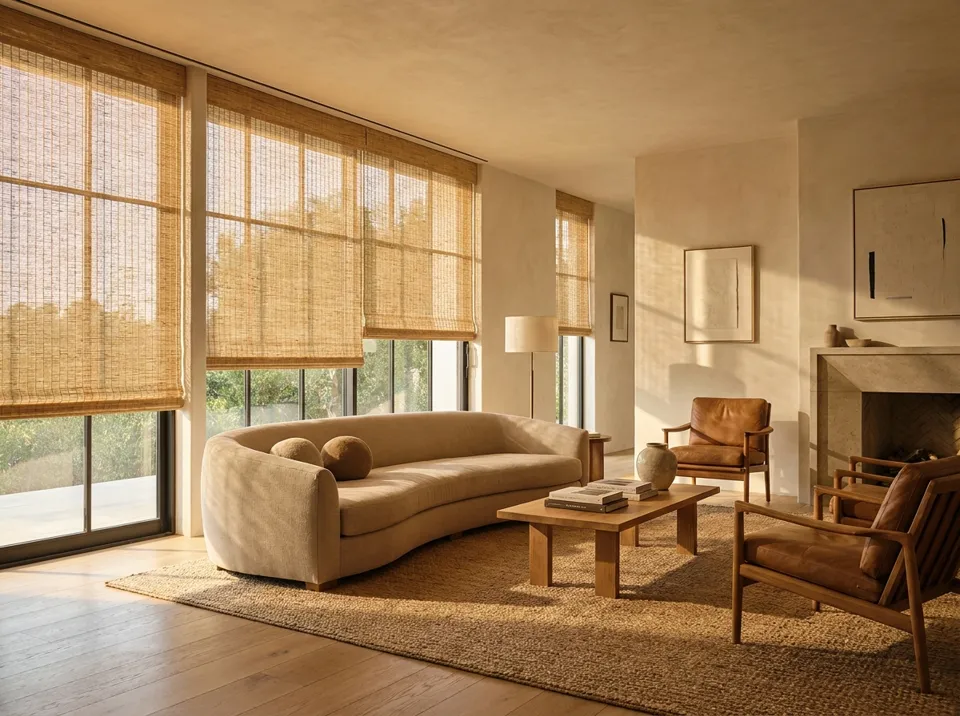
Solar shades in Auburn, WA are the pick when the problem is glare and sun damage, not darkness. A solar shade is a tight-weave roller fabric, built like a fine screen, that cuts the harsh light on a screen, a floor, or a dinner table while you keep most of the view out the window. This 2026 guide explains how solar shades differ from the rest of our custom window treatments, which openness level fits which room, where they fall short, and how our measure-and-install crew handles the job from first visit to final mount.
TL;DR
- Solar shades Auburn WA homes pick in 2026 to stop glare and UV fading without losing the view.
- Openness 1% for hot west glass, 3-5% for living rooms and offices: the number matters more than the color.
- Solar shades are not blackout and give little night privacy; pair or layer where darkness matters.
- Rainier Blinds measures and installs with our own crew; shades are custom-made by a wholesale supplier to your exact measurements.
Why this matters
Glare is the most common window complaint we hear in Auburn homes, and it has a season. From late spring through early fall, low afternoon sun crosses west- and south-facing glass in Lea Hill, Lakeland Hills, and the West Auburn ramblers, and it lands exactly where people live: on the TV, on the laptop, across the dining table. Curtains answer glare by killing the window. Solar shades answer it by filtering it.
The second problem is slower: UV. Hardwood floors, rugs, and furniture in South King County homes fade unevenly on the sun side of the house long before anything looks wrong from the street. Solar fabrics block the majority of harmful UV rays even at their most open, which is why they are the default first conversation for rooms with wood floors and valuable furniture.
The trade-off you accept is honest: a solar shade is a daytime product. At night, with the room lit, a solar fabric shows silhouettes from outside the way a window screen does. That is the correct product for a great room facing your own back yard, and the wrong one as the only covering for a street-facing living room. We will tell you which situation you are in when we measure, because the answer decides whether solar goes on the window alone or in a pair.
In 2026 the buying order that works is openness first, opacity second, color third. Most buyers reverse it and pick a color from a sample fan, then discover the fabric lets in too much glare or too little view. Openness is the spec that decides whether the shade actually works, and it is the one number most stock catalogs hide.
Who this is for
This guide is for Auburn and South King County homeowners choosing window treatments for great rooms, kitchens, dining rooms, home offices, and any glass that gets direct sun for part of the day. It fits buyers with new floors or furniture they want to protect, homeowners tired of closing heavy coverings all afternoon just to see a screen, and anyone finishing a room in the Auburn Highlands or Lakeland Hills where large windows are the feature of the house.
It is not the right guide for bedrooms that need true darkness or for windows that face the street at eye level. Those jobs need a blackout shade or a layered setup, and we cover both in related guides. Solar shades are the main player in the sunny rooms, not the whole house.
What to look for in solar shades for Auburn homes
Openness percentage: the one spec that decides everything
Openness is how much light and view pass through the weave, written as a percentage. The range that matters in 2026 runs roughly 1% to 10%.
- 1-3%: tight weave, maximum glare control and UV blockage, view still visible but muted. This is the pick for hot west- and south-facing glass and for rooms where screens or TVs sit in the sun's path.
- 3-5%: the all-around choice. Solid glare control with a clearly open view; this is where most Auburn living rooms and dining rooms land.
- 5-10%: maximum view and daylight, lighter glare control. Fine for north-facing rooms or patios where the sun is not direct, but it will not tame low western sun.
A fabric sold without a stated openness percentage is a guess. Ask for the number, match it to the window's compass direction, and the rest of the decision gets easy.
UV blockage and fabric quality
Quality solar fabrics block the large majority of UV rays at any openness level, which is the whole point for anyone protecting floors and furniture. Check that the fabric carries a real UV rating rather than a marketing claim, and ask how it handles the Pacific Northwest's specific pattern: long gray stretches punctuated by low-angle sun that hits harder than summer's high arc. A tighter weave that seems overkill in June is the right answer in September when the sun drops below the tree line.
Roller hardware and lift options
A solar shade rides the same hardware as any custom roller: a slim cassette or fascia that hides the roll, a bottom bar that hangs straight, and a lift you choose by who uses the window. Cordless lift is the 2026 baseline for any shade within reach of kids or pets, and on solar fabric it keeps the clean, minimal look the fabric is chosen for. Battery motors earn their place on tall great-room glass, high transom rows, and any window behind furniture; they pair with the same remotes and schedules as the motorized shades in the rest of the house, so one command can drop the whole sunny side before the afternoon glare arrives.
Mount type and edge gaps
Inside mounts tuck the roller into the casing and look cleanest; they need real casing depth. Outside mounts cover the trim and close the light gaps that an out-of-square frame guarantees, which makes them the safer default on the older Auburn housing stock. Solar shades are frameless by design, so a bright sliver at the edge is the main fit complaint, and it is prevented by measuring the opening at three widths and three heights, not one tape shot down the middle.
Where solar beats the alternatives
A blackout roller wins darkness but loses the window for the whole day. A light-filtering roller softens sun but blocks the view. Cellular shades win insulation on cold glass but are not view products. A solar shade wins when the window has a view worth keeping and sun you want gone: it is the only one of the four you can watch the yard through at full noon. On price it sits at the accessible end of the custom range, and on wide window runs it replaces several heavy coverings with one clean line.
Top picks for Auburn homes
The great room pick: 3-5% openness solar shades
Buy. A 3-5% solar shade on a south- or west-facing great room holds the view of the yard, kills the afternoon glare on the TV and the seating area, and stops the floors from fading. Buy this for open living and dining spaces in Lakeland Hills and Lea Hill, where the big-window look is the point of the room and heavy coverings fight it.
The home office pick: 1-3% openness on the sunny wall
Buy. A tighter 1-3% weave is the fix for a monitor that washes out between mid-morning and mid-afternoon. You keep enough view to know the weather without squinting through a video call. Buy this for any desk-height window that takes direct sun; skip it on a north-facing office where the glare never arrives and a 5% weave or nothing is the honest answer.
The kitchen pick: solar shades over the sink and eating area
Buy. Kitchens need daylight, not darkness, and solar fabric handles steam and splatter better than most woven materials. It wipes down and keeps the garden window usable. Buy a 5% openness over the sink where the view matters most and the sun is indirect, and a 3% where the afternoon sun tracks straight across the counter.
The pair-to-blackout pick: solar plus blackout for multipurpose rooms
Consider. A guest room that is an office by day and a sleeping room for visitors at night takes a solar shade for the daytime job and a blackout roller on the same window for the night job. Consider the pairing rather than asking one fabric to do both, because no solar shade darkens a room no matter how dense the weave looks in the sample fan.
The tall-window pick: motorized solar shades
Consider. Two-story glass and clerestory rows above the main windows are the case where motorization pays for itself, because the alternative is never adjusting them at all. A scheduled lower at 3 p.m. beats a ladder and a hook pole. Consider motors for any window above reach; a shoulder-height window does not need one and should not pay for it.
What to avoid
Using a solar shade as your only street-facing covering
A solar fabric shows silhouettes at night exactly like a window screen. On a living room that faces the street in downtown Auburn or West Auburn, pair the solar shade with drapery panels or a second roller for evening, or choose a light-filtering fabric with real daytime privacy instead. This is the most common remake request in the category, and it is a five-minute conversation to prevent.
Expecting blackout from a tight weave
Even a 1% solar weave glows in direct sun. Rooms that need darkness for sleep, shift work, or home theater need a blackout product. A solar shade marketed as "room darkening" is still a screen; check the opacity spec, not the swatch name.
Buying on color instead of openness
The gray, charcoal, and bronze tones all look similar in a fan deck under store lighting. Openness, not color, decides whether the room works at 4 p.m. in August. Ask to see the fabric against your own glass during the measure visit; a 3% that looks dense in a showroom can be exactly right on your west-facing wall.
Verdict comparison
| Option | Best for | Key detail | Verdict |
|---|---|---|---|
| 3-5% solar shades | Great rooms, dining rooms | View plus real glare control | Buy |
| 1-3% solar shades | Hot west glass, home offices | Maximum glare and UV control | Buy |
| Solar over kitchen sink | Kitchens | Daylight, easy clean, view | Buy |
| Solar plus blackout pair | Guest rooms, media rooms | One shade per job | Consider |
| Motorized solar | Tall or high glass | Remote and scheduled lift | Consider |
| Solar alone on street front | Street-facing rooms | Silhouettes at night | Skip |
How local measure and install works
Rainier Blinds is a locally owned Auburn company. Our own crew, not a subcontractor, measures your windows and comes back to hang the finished shades. The shades themselves are custom-made to your exact measurements by an established wholesale supplier; fabrication is theirs, the measure and the install are ours, and that split is why you get real pricing on the spot with local accountability on fit.
- Consult: we look at the sun's path in each room, which windows glare and which fade, and match openness to the real problem.
- Measure: each opening is measured at three widths and three heights, casing depth is checked, and trim, cranks, and furniture that interfere are noted.
- Quote on the spot: real pricing before we leave, on every window in the project. Standard rectangular windows start from $275, backed by a warranty of up to 5 years depending on the package.
- Install: shades are custom-made to the confirmed measurements, typically 2 to 4 weeks, then one visit hangs them all, with motors paired and limits set before the crew leaves.
Coverage and scheduling details for home-base jobs sit on the Auburn service area page. New quote requests get a response within 1 business day.
FAQ
What are solar shades and how are they different from regular roller shades?
What openness percentage should I choose for solar shades?
Do solar shades protect furniture and floors from fading?
Can you see through solar shades at night?
Do solar shades block heat in summer?
Can solar shades be motorized?
How much do solar shades cost in Auburn, WA?
How long does it take to get custom solar shades installed?
One last thing
The detail most homeowners miss is the view test at the hour the room fails. A 3% fabric looks different in a bright showroom than it does against your own west-facing wall at 5 p.m. in August, and openness is not adjustable after fabrication. We bring the samples to your glass during the measure, not to a fan deck across a showroom counter. Book the free in-home quote while the sun is on the problem window, and the right openness will show itself in real light instead of on paper.