
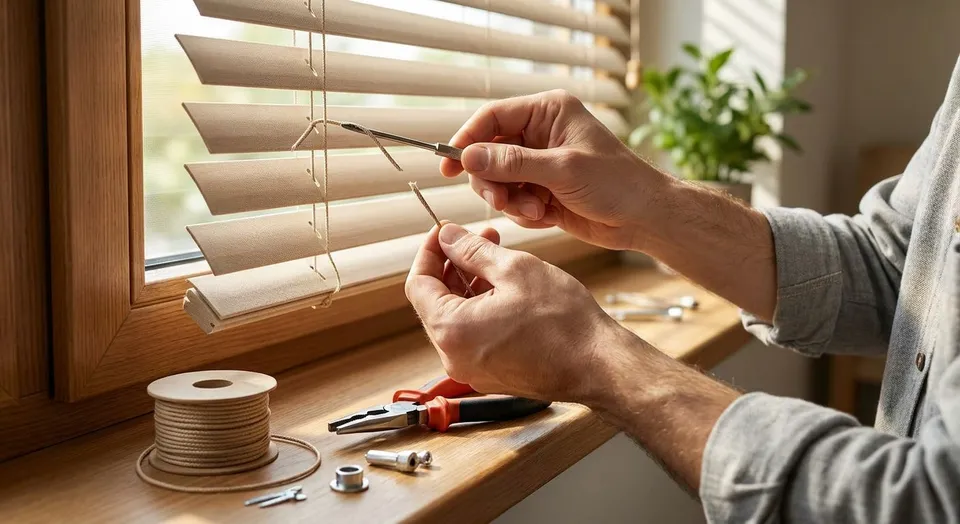
Most broken window blinds fail at one of four points: a snapped lift cord, a stuck clutch or spring mechanism, a bent or loose mounting bracket, or torn and faded fabric. And each one gets a different fix. The first three are usually a 2026 DIY job if you can source the exact replacement part; torn fabric or a cracked headrail almost always means replacement, not repair.
What most repair guides skip: finding the correct clutch or cord for a specific shade brand can eat up more time than the actual repair, and generic universal parts from a hardware store often fail again within a year.
- A snapped lift cord or stuck clutch is usually DIY-fixable in one sitting if you have the right part.
- Bent brackets and loose headrails are a 10-minute fix with a screwdriver and shims.
- Torn fabric, cracked vanes, and warped headrails almost always mean replacement, not repair.
- Blinds and shades older than 8-10 years rarely justify a repair cost versus a new custom shade.
- Rainier Blinds installs and services roller, cellular, roman, and zebra shades across the Greater Seattle Area.
Why This Matters
A broken blind is rarely just cosmetic. A snapped cord on a corded lift can turn into a strangulation hazard for kids and pets, and a stuck clutch means the shade stays stuck open or closed until someone fixes it. Ignoring it for a season usually turns a $20 part into a full replacement once UV exposure and moisture finish the job the broken part started.
Knowing which failures are worth fixing yourself, and which ones are a sign the whole unit is done, saves you from throwing good time at a shade that's past its useful life. If you're weighing mount type options for a replacement, that decision matters just as much as the repair itself.
How to Repair a Broken Window Blind (Step by Step)
- Identify the exact failure point. Operate the shade slowly and watch where it binds, slips, or stops responding, cord, clutch, bracket, or fabric.
- Match the part to the brand and model. Clutches and cord locks are not universal across manufacturers; a mismatched part will strip or slip within weeks.
- Remove the headrail or valance. Most brackets release with a flathead screwdriver or a firm upward push, no drilling required on most residential mounts.
- Swap the failed component. Rethread the cord, snap in the new clutch, or replace the bracket, following the same routing path as the original.
- Reinstall and test through a full cycle. Raise and lower the shade completely three times before calling the repair done, intermittent failures often reappear on the third or fourth cycle.
Broken Lift Cord: Rethread or Replace
A snapped or frayed lift cord is the single most common blind repair. If the cord broke at a knot or near the bottom rail, you can often rethread the existing cord through the ladder or cord lock without buying a new one.
If the cord is frayed along its length or has lost tension, replace the full cord set rather than patching one section. A partial fix rarely holds past a few weeks of daily use. Verdict: DIY if you can access the cord lock without disassembling the headrail; call a pro if the cord routes through a motorized housing.
Stuck or Broken Clutch (Roller and Cellular Shades)
Roller and cellular shades use a clutch mechanism instead of a cord lock, and it's the part most likely to fail on a shade that's seen daily use for 5+ years. Symptoms: the shade won't hold position, spins freely, or requires two hands to operate.
Clutches are brand-specific and press-fit into the headrail, so the fix is usually a swap, not a repair. Verdict: DIY if you can identify the exact clutch model; call a pro if the shade is still under a manufacturer warranty, since opening the headrail yourself can void it.
Bent or Loose Mounting Brackets
Brackets loosen from repeated operation, wall settling, or a shade that was never leveled correctly at install. A shade that sags on one side or won't seat fully in the headrail is almost always a bracket issue, not a fabric or cord problem.
Tighten the mounting screws first, then check for stripped anchors in the wall or window frame. A stripped anchor needs a slightly larger screw or a wall plug, not just a tighter twist. Verdict: DIY, 10 minutes with a screwdriver in most cases.
Torn, Faded, or Cracked Fabric and Vanes
This is the one failure type that doesn't have a real repair path. UV exposure breaks down fabric fibers and plastic components from the inside, so a torn panel or cracked vane on one shade usually signals the rest of the unit is close behind.
Sewing or patching fabric shades is possible but rarely holds up to daily light and moisture exposure in Pacific Northwest homes. Verdict: Replace. This is the point where a custom roller shade or cellular shade outperforms trying to patch the old one, new fabric, no mismatched color, and a mechanism rated for another decade of use.
Why Window Blinds Break Down
- Repeated pulling force on lift cords stretches and frays the cord fibers over hundreds of operating cycles.
- UV exposure fades fabric and makes plastic clutches and cord locks brittle, especially on south- and west-facing windows.
- Moisture in kitchens and bathrooms warps headrails and valances made from lower-grade materials.
- Kids and pets put lateral stress on cords and brackets that they weren't designed to handle.
- Big-box and online stock blinds often use cheaper clutch and cord-lock components that fail faster than commercial-grade parts.
- Skipped maintenance: dust and debris in the clutch housing accelerates wear that a quick cleaning would have prevented.
Get a Straight Answer on Repair vs. Replace
Rainier Blinds measures, sells, and installs with our own crew across the Greater Seattle Area.
Can a Broken Window Blind Be Repaired, or Does It Need Replacing?
A broken window blind can be repaired when the failure is a cord, clutch, or bracket, all replaceable parts on most shades. It needs full replacement when the fabric is torn, faded past matching, or the headrail itself is cracked or warped, since those aren't serviceable components on most residential shades.
Is It Cheaper to Repair or Replace a Broken Blind?
Repair is cheaper for a single cord or clutch failure on a shade that's otherwise in good shape. Once a shade needs a second or third repair within a couple of years, the labor and part cost starts approaching what a new custom shade runs, and you're not getting a warranty on 2026-era materials in return.
How Long Do Window Blinds Last Before They Need Replacing?
Window blinds and shades typically last 7 to 10 years with normal daily use before mechanical parts and fabric start failing in clusters rather than one at a time. Homes with heavy sun exposure or high humidity, common in Pacific Northwest kitchens and sunrooms, tend to land on the shorter end of that range.
If you're past that window and fixing the same shade twice a year, it's cheaper long-term to replace it with a cordless option built for pets and kids than to keep sourcing discontinued parts.
FAQ
How do you fix a window blind that won't go up or down?
A shade that won't raise or lower usually has a failed clutch or a snapped lift cord. Test the cord tension first, then check the clutch mechanism inside the headrail if the cord looks intact.
Can you repair a broken window blind yourself?
Yes, cord and bracket repairs are DIY-friendly with the right replacement part and 15-30 minutes. Clutch replacements and any fabric damage are harder to source and fix without matching the original brand and model.
What tools do you need to repair a window blind?
A flathead and Phillips screwdriver cover most bracket and headrail repairs. Cord and clutch swaps also need the exact replacement part matched to the shade's brand and mount type.
How much does it cost to repair a window blind?
Repair cost depends entirely on what broke and the shade brand, since parts are not universal across manufacturers. Get a quote based on the specific issue rather than assuming a flat repair fee applies.
Is it better to repair or replace a broken window blind?
Repair a single cord, clutch, or bracket failure on a shade that's otherwise sound. Replace once fabric is torn or faded, or once the same shade has failed twice in under two years.
Why does my window blind keep breaking?
Repeated pulling force, UV exposure, and moisture are the three biggest causes of recurring blind failures. Cheaper stock components used in many big-box blinds also wear out faster than commercial-grade parts.
Are cordless blinds less likely to break?
Cordless shades remove the lift cord entirely, which eliminates the single most common point of failure. The clutch or spring mechanism still wears over time, but it typically outlasts a corded system.
One Last Thing
The repair that gets skipped most often isn't the cord or the clutch. It's cleaning the clutch housing. A quick vacuum of dust and debris out of the mechanism once a year prevents the binding that eventually snaps cords and strips gears in the first place, and it costs nothing.
If you're past the point of patching and ready to look at custom shades built to hold up in Pacific Northwest sun and humidity, Rainier Blinds measures, sells, and installs with its own crew, not a subcontractor, across Auburn, Bellevue, Tacoma, and the rest of the Greater Seattle Area.