
Custom drapery holds up for 10+ years when you clean it on a schedule instead of waiting until it looks dingy. The fabric, the lining, and the hardware all age differently, and each one needs a different kind of attention.
- Vacuum custom drapery panels every 2-4 weeks with a low-suction brush to stop dust from working into the weave.
- Professional dry cleaning every 12-18 months keeps lined drapery and blackout curtains from yellowing or shrinking.
- Rotate panels seasonally on south- and west-facing windows in 2026 to even out UV fading across the fabric.
- Spot-clean spills within the hour with a dry cloth first. Water sets most drapery fabric dyes instead of lifting them.
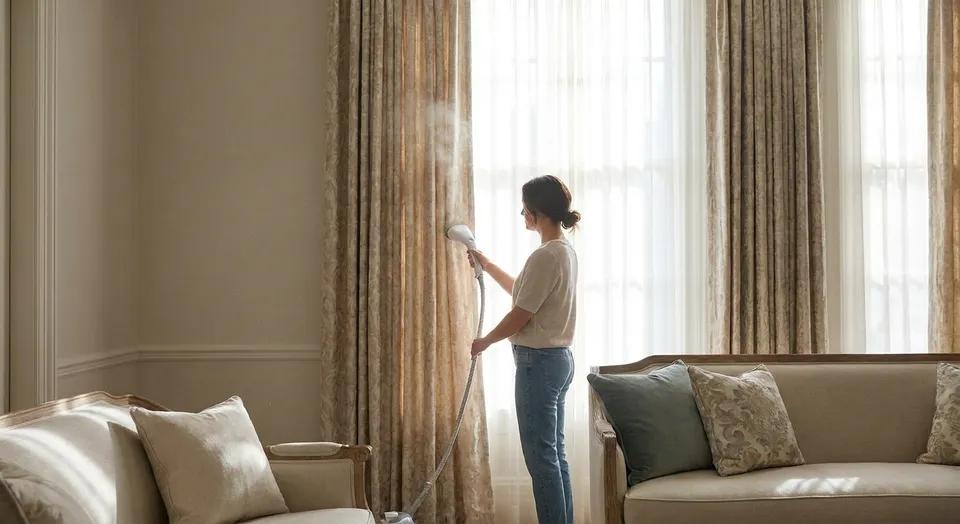
- Steam custom drapery curtains instead of ironing them directly; scorch marks on natural fiber panels don't come out.
Why this matters
Custom drapery costs more than off-the-shelf curtains because the fabric, the lining, and the fullness are built to a specific window, and that investment only pays off if the panels last. Dust that sits in a weave for a year turns abrasive and cuts fibers every time the panel moves. Direct sun without rotation fades one edge of a panel while the fold stays bright, and there's no fixing that mismatch once it happens.
Most of the damage that shows up on custom drapery in Auburn, Bellevue, and Tacoma homes in 2026 isn't from age. It's from skipped cleaning cycles and the wrong cleaning method for the drapery fabric chosen at install. Linen blends, silk, and heavier blackout linings each have a different tolerance for water, heat, and agitation.
What you'll need
- Vacuum with a soft brush or upholstery attachment (never the beater bar)
- Lint roller or microfiber cloth for quick touch-ups between vacuum sessions
- A garment steamer (not a flat iron) for wrinkle removal
- Distilled water and a white cloth for spot-testing stains
- A step stool or ladder to reach the header and rod hardware
- Mild dish soap diluted in water, for washable cotton or synthetic panels only
- The care tag or install paperwork from your original custom drapery order
The steps
1. Vacuum every 2 to 4 weeks
Dust is the number one cause of premature wear on custom drapery, and it's invisible until the panel is held up to light. Set the vacuum to its lowest suction setting, attach the soft brush head, and run it top to bottom in overlapping passes. Do the header and pleats first since that's where dust concentrates most.
Skip the vacuum roller bar entirely. It's built for carpet fibers, not draping fabric, and it will fray pleats and hems over a few passes. Expect the panel to look noticeably brighter after one pass if it's been more than a month since the last cleaning.
2. Rotate or flip panels seasonally
Sun exposure fades fabric unevenly, especially on west-facing windows that catch direct afternoon light most of the year. Swap the leading and trailing edges of each panel every 3 to 4 months so no single fold takes all the UV damage. This matters most for solid-color linen and cotton blends, less for patterned or heavily textured fabrics where fading is harder to spot.
Common mistake: owners rotate blinds and shades but forget drapery panels because they assume the folds hide fading. They don't, pull a panel fully open after a year of no rotation and the difference is obvious.
3. Spot-clean spills immediately
Blot, don't rub, and use a dry white cloth first to lift as much liquid as possible before any water touches the fabric. Water alone can set a stain permanently on silk, rayon, and some cotton blends because it spreads the dye rather than removing it. Test any cleaning solution on a hidden seam allowance first and wait 10 minutes to check for color transfer or spotting.
For grease or food stains, cornstarch or baking soda applied dry and left for 15 minutes absorbs oil before it sets into the weave. Never scrub. Agitation on custom drapery fabric breaks the weave faster than the stain itself would.
4. Steam instead of iron
A garment steamer removes travel and storage wrinkles without direct heat contact, which matters because most custom drapery fabric, especially anything with a poly-cotton blend or a blackout lining, scorches at iron temperatures long before it steams. Hang the panel on the rod, run the steamer 2-3 inches away from the fabric, and let gravity pull the wrinkles out as you go.
For blackout curtains specifically, steam the lining side too. The thermal backing wrinkles independently of the face fabric and holds creases longer.
5. Dry clean every 12 to 18 months
Even with regular vacuuming, oils from air, cooking, and handling build up in the fabric weave over a year or more. Professional dry cleaning resets the fabric, removes embedded odor, and catches loose threads or hem issues before they become bigger repairs. Ask the cleaner specifically about drapery experience. Panel-length fabric needs different equipment than garment cleaning, and a shop unfamiliar with drapery can shrink a lined panel by an inch or more.
Budget for this as a maintenance cost, not an emergency fix. Panels cleaned on schedule every 12-18 months in 2026 will outlast panels cleaned reactively by years, based on aggregated fabric-care industry data.
6. Check and lubricate hardware quarterly
Rods, rings, and traverse tracks wear from friction long before the fabric does. Check that rings glide smoothly and apply a small amount of silicone spray (never oil-based lubricant, which stains fabric) to any sticking track every 3 months. If panels are dragging or catching, the issue is almost always the hardware, not the fabric.
Get custom drapery installed right
Local measure, in-house install, real pricing on the spot.
Troubleshooting
Panel won't lie flat after cleaning. Steam it while it hangs on the rod rather than laying it flat. Gravity does most of the work of straightening pleats that a flat surface can't replicate.
Musty smell that vacuuming doesn't fix. This usually means moisture got trapped behind the panel against a cold window. Air the panel outdoors on a dry day and check for condensation on the glass. The fix is often a dehumidifier in the room, not the fabric.
Fading you didn't catch in time. Once UV fading sets in, there's no reversing it on natural fiber fabric. Rehanging the panel with the faded edge toward the wall side minimizes visibility, but replacement is the only real fix for a badly faded panel.
Pleats losing their shape. Pleats that sag usually mean the buckram or interlining inside the header has broken down, which happens faster in humid rooms. This is a repair job for a drapery workroom, not a DIY steam-and-hope fix.
Static cling on synthetic-blend panels. A light mist of diluted fabric softener on a cloth, wiped down the panel, cuts static without leaving residue. Avoid spraying directly onto the fabric. It can spot silk and rayon blends.
Hardware squeaking or sticking. Nine times out of ten this is dust or dried lubricant buildup on the track, not a mechanical failure. Wipe the track clean before reapplying silicone spray.
Tools and resources
- Soft-brush vacuum attachment and a garment steamer cover 90% of routine custom drapery maintenance
- Keep the original fabric care tag from your Rainier Blinds order on file. It tells you the exact fiber blend and wash tolerance
- If drapery is paired with shades in the same room, review how to layer shades and drapery for living rooms for maintenance sequencing when both treatments share a window
- A local dry cleaner with drapery-specific equipment beats a garment-only cleaner every time for panel-length fabric
What to do next
If a panel is beyond spot-cleaning. Faded past the point of rotation, torn at a seam, or the lining has separated from the face fabric. Replacement usually costs less over time than repeated professional repairs. Rainier Blinds measures and installs custom drapery panels with a matched fabric and lining spec, so a replacement panel matches the rest of the room instead of standing out as a patch job.
FAQ
How often should custom drapery be professionally cleaned?
Custom drapery needs professional dry cleaning every 12 to 18 months in 2026. Households with pets, smokers, or high dust exposure should clean closer to the 12-month mark.
Can you wash custom drapery curtains at home?
Only if the care tag specifically says machine or hand washable. Most lined, silk, or blackout drapery is dry-clean only. Washing an unlabeled panel at home risks shrinking the lining or bleeding the dye.
What causes drapery fabric to fade?
Direct UV exposure through unrotated south- or west-facing windows causes most drapery fading. Rotating panels every 3 to 4 months spreads the exposure evenly across the fabric.
Is steaming better than ironing for drapery?
Yes, steaming is safer for most custom drapery fabric because it removes wrinkles without direct heat contact. A flat iron can scorch poly-cotton blends and blackout linings at standard settings.
How do you remove a stain from drapery without damaging the fabric?
Blot the stain dry first, then test any cleaning solution on a hidden seam before applying it to the visible fabric. Water alone can set some drapery dyes, so blotting dry is the safer first move.
Why is my drapery hardware sticking?
Dust and dried lubricant buildup on the rod or track cause most sticking issues, not mechanical failure. Wiping the track clean and applying silicone spray quarterly usually solves it.
How long does custom drapery last with proper maintenance?
Custom drapery lasts 10 years or more with regular vacuuming, seasonal rotation, and scheduled dry cleaning. Panels cleaned reactively instead of on a schedule tend to show wear years earlier.
Should drapery and shades on the same window be cleaned the same way?
No, drapery fabric and shade materials have different cleaning tolerances even on the same window. Treat each layer according to its own care tag rather than applying one method to both.
One last thing
The fastest way to shorten the life of custom drapery isn't sun or dust. It's an iron set too hot for the fabric blend. A single pass at the wrong setting can leave a shiny scorch mark that no amount of steaming or cleaning reverses, which is why steaming stays the safer default even for panels that technically tolerate ironing.