
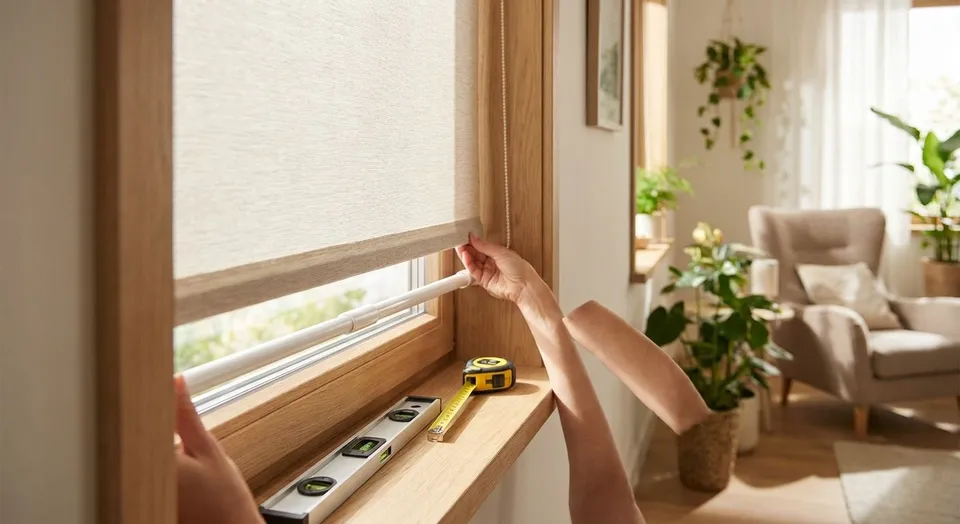
You can install cordless blinds without drilling using pressure-mount tension brackets, adhesive-backed brackets, or magnetic brackets, all three skip the drill and leave the wall or frame intact. The catch: each method has a weight ceiling, so a lightweight roller or cellular shade mounts fine, but a heavier woven wood roman or drapery panel usually still needs a drilled bracket for long-term hold.
- Pressure-mount and adhesive tension brackets install cordless blinds without drilling in 2026. Zero permanent holes.
- Adhesive brackets suit lightweight roller or cellular shades; heavier woven wood or drapery still need drilled mounts.
- Rainier Blinds recommends professional install for wide windows or humid Pacific Northwest rooms where adhesive struggles.
- Renters and HOA households gain the most since no-drill brackets remove without wall damage or deposit risk.
Why this matters
Renters, condo owners, and anyone under an HOA agreement can't always drill into a frame, and a lot of homeowners just don't want the holes in a rental-grade window casing. Cordless blinds already remove the cord-safety issue for kids and pets, pairing that with a no-drill mount solves the second-biggest objection buyers bring up before ordering custom cordless blinds for apartment renters. The tradeoff is durability: a drilled bracket outlasts an adhesive one by years, so knowing which rooms and fabrics can tolerate no-drill mounting saves a callback in 2026.
How Do You Install Cordless Blinds Without Drilling?
Three no-drill mounting systems cover almost every cordless shade on the market in 2026:
- Measure the inside or outside frame width the same way you would for a drilled install. No-drill brackets still need an exact fit.
- Clean the mounting surface with rubbing alcohol; any dust or oil under an adhesive bracket cuts its hold time significantly.
- Attach the bracket: press the pressure-mount tension rod into the frame, or hold the adhesive bracket in place for the full cure time printed on the packaging (usually 24 hours before hanging weight).
- Snap the headrail into the bracket and test the cordless lift mechanism before loading the window with a shade permanently.
- Recheck tension after the first week: pressure-mount systems can loosen slightly as the frame settles, especially in older homes.
No-drill mounting method comparison
| Method | Best for | Pros | Cons | Verdict |
|---|---|---|---|---|
| Pressure-mount (tension) brackets | Inside-mount windows, lightweight fabrics | No adhesive residue, fully removable | Can loosen on uneven or older frames | Buy for standard rentals |
| Adhesive tension brackets | Cellular and roller shades under a typical single width | Strong initial hold, works on trim or drywall | Loses grip in humid or high-heat rooms | Buy for dry interior rooms |
| Magnetic brackets | Metal window frames or steel door casings | Instant install, no cure time | Only works on ferrous metal surfaces | Skip unless frame is metal |
All three skip the drill entirely, but none of them is a universal fix. Match the method to the fabric weight and the frame material before you order.
Pressure-Mount Brackets: The Default for Rentals
Pressure-mount brackets clamp against the inside of the window frame using spring tension, the same principle as a tension shower-curtain rod. They hold lightweight roller shades and cellular shades without a problem and pull off cleanly at move-out, which is why they show up constantly in guides to no-drill blinds for apartment renters.
The limitation is frame condition. A warped or painted-over trim board won't grip tension brackets as reliably as a clean, square frame, and wide windows put more leverage on the spring than narrow ones. Verdict: Buy for inside-mount rentals under a standard single window width.
Adhesive Tension Brackets: Best for Drywall-Only Mounts
Adhesive brackets use an industrial-strength foam tape instead of screws, and they're the only no-drill option that works on flat drywall with no frame to grip. They're common for roller shades and light-filtering cellular shades in rooms without a deep window casing.
Humidity is the real enemy here. Pacific Northwest bathrooms, kitchens, and basement-level rooms run higher moisture than the rest of the house, and adhesive bond strength drops faster in that environment, something worth factoring in before choosing this route for a Seattle or Tacoma-area bathroom. Verdict: Buy for dry living rooms and bedrooms, Hold for bathrooms and basements.
Magnetic Brackets: A Narrow Fit for Metal Frames
Magnetic mounts only work when the frame or adjacent casing is ferrous metal, steel security doors, some older steel-cased basement windows, or metal-clad sliding door frames. When that condition is met, they install in seconds and remove just as fast.
Outside of metal-frame situations, they're not an option, which makes this the narrowest-use method of the three. Verdict: Skip unless you've confirmed a metal frame with a magnet test first.
Why No-Drill Results Vary by Window
Not every window or fabric performs the same under a no-drill mount. The factors that actually move the outcome:
- Fabric weight: a lightweight roller or cellular shade puts far less strain on a bracket than a lined roman shade or drapery panel.
- Window width: wider spans increase leverage on tension and adhesive brackets alike, raising failure risk.
- Frame material: bare wood and vinyl hold adhesive better than painted or textured trim.
- Room humidity: bathrooms, kitchens, and below-grade rooms shorten adhesive bond life.
- Mount type: inside mounts rely on frame depth for tension brackets; outside mounts need enough flat wall or trim surface for adhesive.
- Long-term plans: a renter moving in under two years tolerates more risk than a homeowner planning to keep the shade for a decade.
Getting the right mount type for custom blinds matched to the window before ordering avoids most of these failure points outright.
“If the fabric is heavier than a single-layer roller shade, plan on a drilled bracket, not adhesive.”
Do Adhesive Brackets Damage the Wall?
No, quality adhesive brackets remove cleanly from drywall and painted trim when pulled slowly and at a low angle, the same way removable mounting strips work. Rushed removal or pulling straight out can take paint with it, so slow and low-angle is the rule, not the exception.
Is Cordless the Same as No-Drill?
No, cordless refers to the lift mechanism, while no-drill refers to the mounting method, and the two are independent choices. A shade can be cordless and still require a drilled bracket, or corded and mounted with tension brackets; pairing cordless with no-drill simply solves both the child-safety and the rental-damage concerns at once, which is why cordless blinds for homes with pets and kids get paired with no-drill mounts so often.
Can Heavier Fabrics Skip Drilling Too?
Rarely, woven wood romans, lined drapery, and wide outdoor shades carry enough weight that adhesive and tension brackets fail faster than on a standard roller shade. For those product lines, a drilled bracket installed correctly the first time avoids a sagging headrail six months in.
Get a no-drill mount checked by a pro
Rainier Blinds measures and confirms the right mount type before you order.
FAQ
How do you install cordless blinds without drilling?
Pressure-mount tension brackets, adhesive tension brackets, or magnetic brackets install cordless blinds without drilling in 2026. Match the bracket type to the fabric weight and frame material before you order.
What is the best no-drill mounting method for blinds?
Pressure-mount brackets are the best default no-drill method for standard inside-mount windows with lightweight fabrics. Adhesive brackets work better on flat drywall with no frame to grip.
Do adhesive brackets damage the wall?
No, quality adhesive brackets remove cleanly from drywall and trim when pulled slowly at a low angle. Fast, straight-out removal risks pulling paint off the surface.
Can cordless blinds hold heavy fabric without drilling?
Rarely, heavier fabrics like woven wood romans or lined drapery overload adhesive and tension brackets faster than a lightweight roller shade. Drilled brackets stay the safer call for those product lines.
How long do adhesive tension brackets last?
Adhesive brackets hold reliably in dry rooms but lose bond strength faster in humid spaces like bathrooms and basements. Pacific Northwest humidity in particular shortens the usable life compared to a drilled bracket.
Is cordless the same as no-drill?
No, cordless describes the lift mechanism while no-drill describes the mounting method, and they are chosen independently. A shade can be cordless and still need a drilled bracket depending on fabric weight.
What blinds work best for renters who can't drill?
Lightweight roller and cellular shades on pressure-mount or adhesive brackets work best for renters who can't drill. They install and remove without leaving marks on the frame or wall.
Should I hire a professional installer for cordless shades?
Hire a professional when the window is wider than standard or the fabric is heavier than a single-layer roller shade. A correctly drilled bracket outlasts adhesive or tension mounts by years in those cases.
One Last Thing
The detail most buyers miss in 2026: adhesive bond strength is rated for cure time, not lifespan, and skipping the full 24-hour cure before hanging the shade is the single most common cause of an adhesive bracket failing in the first month. Give it the full cure window and it holds through the season it's rated for, rush it and even the right bracket for the right fabric can let go early.