
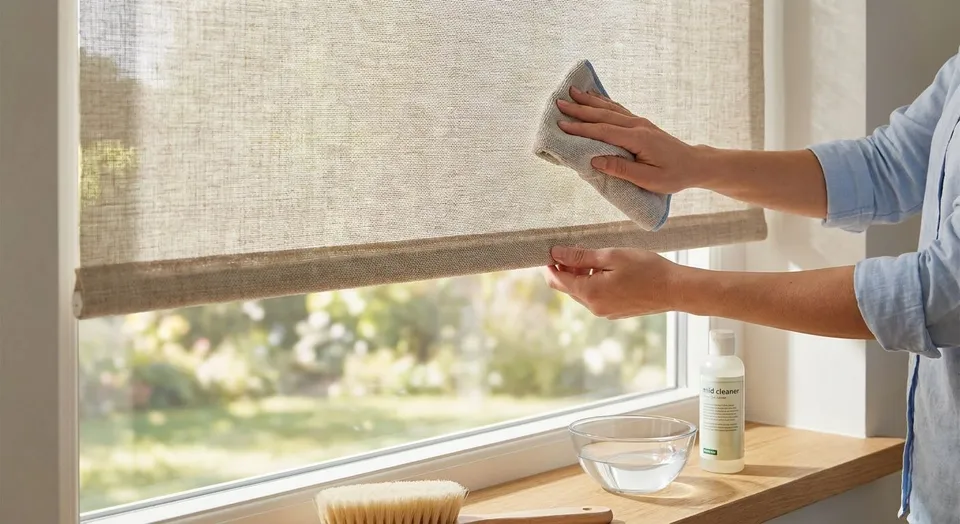
Fabric roller shades stay clean with regular dry dusting plus a monthly vacuum pass and an occasional damp-cloth wipe using mild soap and water, never a full soak, and never bleach on light-filtering or solar mesh fabrics.
- Dust weekly with a microfiber cloth or extendable duster; vacuum monthly with the brush attachment on low suction.
- Spot-clean stains with a barely damp cloth and mild dish soap. Blot, never scrub or soak the fabric.
- Blackout-coated roller shades need less water than light-filtering or solar shades because the backing can peel.
- Rainier Blinds recommends professional cleaning every 2-3 years for heavily soiled kitchen or entryway roller shades.
- Skip glass cleaner, bleach, and ammonia-based products on any fabric roller shade in 2026. They break down the coating.
Why this matters
Fabric roller shades collect dust faster than most people expect, especially in the Pacific Northwest where pollen, wood smoke, and moisture cycle through open windows most of the year. A shade that looks fine from across the room often has a visible gray film up close by month three.
The fabric itself is the reason cleaning method matters so much. Vinyl-backed blackout fabrics tolerate more moisture than light-filtering polyester weaves, and solar mesh fabrics used on kitchen roller shades trap grease and steam that plain dusting won't remove. Get the method wrong and you risk warping the fabric, delaminating the blackout backing, or leaving water spots that never fully disappear.
How to Clean Fabric Roller Shades
Work through these steps in order. Skipping straight to soap and water is the most common mistake homeowners make.
- Lower the shade fully and dust both sides with a microfiber cloth or a clean, dry paintbrush for tight folds along the hem.
- Vacuum with the brush attachment on the lowest suction setting, working top to bottom in straight passes. Never use the hose alone. It pulls at the fabric weave.
- Spot-treat stains with a cloth dampened in lukewarm water and a drop of mild dish soap. Blot the spot, don't rub, and work from the outside of the stain inward.
- Rinse with a barely damp clean cloth to lift soap residue before it dries into a ring.
- Air-dry fully extended before rolling the shade back up. Rolling damp fabric traps moisture against itself and can cause mildew inside the tube.
Repeat the dusting step weekly and the vacuum-and-spot-check routine monthly. That schedule handles most household dust loads through 2026 without ever requiring a deep soak.
| Cleaning method | Best for | Frequency | Risk if overused |
|---|---|---|---|
| Dry dusting | All fabric roller shades | Weekly | None |
| Brush-attachment vacuum | All fabric roller shades | Monthly | Snags fabric if suction is too high |
| Damp-cloth spot clean | Light-filtering, solar mesh | As needed | Water spots if not blotted fully dry |
| Professional cleaning | Blackout, heavily soiled kitchen shades | Every 2-3 years | None when scheduled properly |
Blackout Roller Shades: Handle the Backing With Care
Blackout fabric has a foam or vinyl backing laminated to the front fabric layer, and that backing is the part that fails first. Excess water seeps between the layers and causes bubbling or peeling that no amount of drying reverses.
Stick to dry dusting and vacuuming for blackout shades whenever possible. If a stain needs spot treatment, use the smallest amount of moisture that will lift it and dry the shade fully extended, away from direct heat.
Solar and Light-Filtering Shades: More Tolerant, Still Not Machine-Washable
Solar mesh and light-filtering polyester weaves handle a damp cloth better than blackout fabric because there's no laminated backing to damage. That makes them the more forgiving option for kitchen windows where grease splatter and steam are a regular problem.
Even so, these fabrics are not machine-washable and shouldn't go near a washing machine or dryer. Heat sets stains permanently and can shrink the panel unevenly, which shows up as a shade that no longer rolls flat.
Why Cleaning Needs Vary by Shade
How often a fabric roller shade needs attention depends on a handful of factors specific to the room and the fabric:
- Kitchen proximity: grease and steam build up faster near cooktops than in bedrooms or living rooms.
- Sun exposure: south- and west-facing windows pull in more dust through open sashes during warmer months.
- Fabric type: blackout backings trap dust differently than open-weave solar mesh.
- Pet hair: homes with pets need weekly vacuuming instead of monthly.
- Local air quality: wood-burning season and pollen counts in South King County drive up dust load between fall and spring.
- Window operation: shades near frequently opened windows or sliding doors collect more airborne debris.
“If the fabric feels stiff or crackly after cleaning, too much water got into the weave, dry it fully extended and skip the soap next time.”
Related Questions
Can you machine wash fabric roller shades?
No, fabric roller shades cannot go in a washing machine or dryer. The heat and agitation shrink the panel unevenly and can permanently warp the tube it rolls onto, so dry dusting and spot cleaning are the only safe methods.
How do you remove mildew from roller shades?
Mildew on a fabric roller shade comes from moisture trapped while rolled up damp, and it needs a mix of water and white vinegar applied with a soft cloth, then a full air-dry before rerolling. If the mildew has spread through the fabric weave rather than sitting on the surface, replacement is usually cheaper than repeated treatment.
How often should roller shades be professionally cleaned?
Roller shades in kitchens or high-traffic rooms benefit from professional cleaning every 2-3 years, while bedroom or living room shades often go longer between deep cleans. Rainier Blinds installs solar shades made to resist fade and buildup for households that want to stretch that interval further.
Do roller shades or cellular shades collect less dust?
Cellular shades trap more dust in their honeycomb pockets than flat fabric roller shades, which is one reason homeowners comparing roller shades vs. cellular shades for easy upkeep often land on roller shades for kitchens and bathrooms.
If a roller shade is already stained, sun-faded, or fraying at the hem beyond what cleaning fixes, replacement makes more sense than continued spot treatment. New fabric roller shades from Rainier Blinds come measured and installed by the same crew that handles the fitting, not a subcontractor.
Get roller shades built for easy upkeep
Rainier Blinds measures and installs custom fabric roller shades across the Auburn and Seattle area.
FAQ
How do you clean fabric roller shades without taking them down?
Lower the shade fully and work with a microfiber cloth or vacuum brush attachment in place. Most fabric roller shades never need to come off the wall for routine dusting or spot cleaning.
What household products should never touch fabric roller shades?
Bleach, ammonia-based glass cleaner, and any solvent-based stain remover break down blackout coatings and weaken fabric fibers. Stick to mild dish soap diluted in lukewarm water.
How do you get grease off kitchen roller shades?
Blot the grease spot with a cloth dampened in warm water and a drop of dish soap, working from the outer edge in. A second pass with a clean damp cloth removes soap residue before it dries into a ring.
Can sunlight damage fabric roller shades over time?
Yes, UV exposure fades and weakens fabric fibers over years of daily use, which is separate from dirt buildup and isn't fixed by cleaning. Solar shades rated for fade resistance hold up longer on south- and west-facing windows.
Is it safe to steam clean fabric roller shades?
Steam cleaning is not recommended for fabric roller shades because the heat and moisture can warp the fabric or damage blackout backing. A dry vacuum brush and damp-cloth spot cleaning cover nearly every situation.
How do you clean the tube and hardware, not just the fabric?
Wipe the roller tube, brackets, and chain or motor housing with a dry cloth monthly, since dust here transfers back onto clean fabric otherwise. A vacuum brush attachment reaches the bracket corners that a cloth misses.
One Last Thing
The fabric on a roller shade rarely fails from age. It fails from being rolled up wet. A shade cleaned correctly but rerolled before it's bone-dry traps moisture against itself inside the tube, and that's where mildew and fabric distortion actually start.