
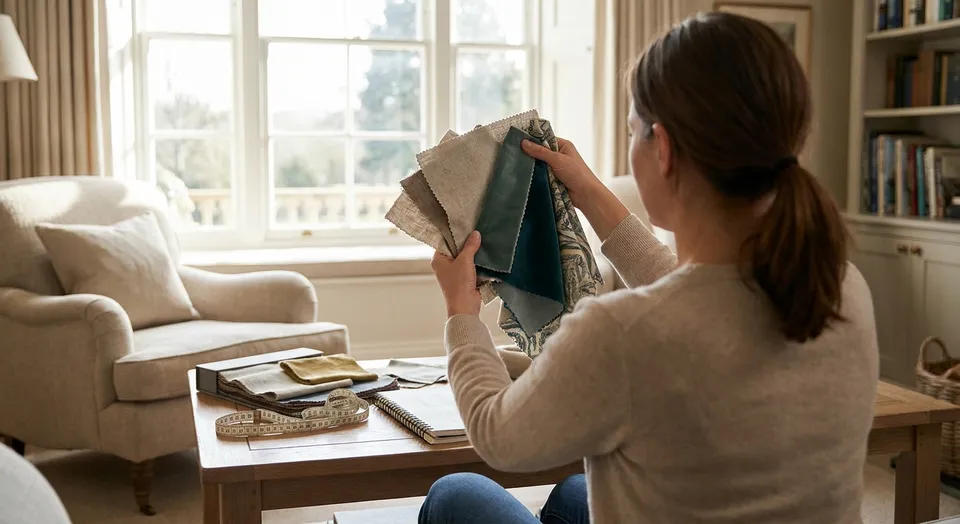
Picking drapery fabric is the one decision homeowners regret most after installation, not because the color was wrong, but because nobody checked how the fabric would perform in the room before it went on the track. This guide walks through the exact criteria to weigh before you order custom drapery for a Seattle-area home in 2026.
- Match fabric weight to function first: sheers for light, mid-weight cotton-linen blends for living rooms, blackout-lined panels for bedrooms.
- Fullness ratio of 2x to 2.5x the rod width is the industry standard for how to choose drapery fabric that hangs correctly.
- Pacific Northwest humidity makes natural linen prone to sagging near uninsulated windows. Go with a poly-blend or add lining.
- Blackout-lined drapery in a home theater setup is a Buy for light control; unlined sheers alone are a Skip for that use case.
- Get in-home measurements before ordering, fabric that's cut short by even an inch won't rehang correctly.
Why this matters
Fabric choice decides three things at once: how much light gets through, how the drapery holds up in the room's humidity and sun exposure, and whether the panels actually look intentional once hung. Big-box retailers sell one weight of fabric in five colors. Custom drapery gives you the fiber, the weave, and the lining separately, which is the only way to get light control and durability right in the same order.
South King County and Seattle homes see a specific set of problems: west-facing rooms that fade fabric fast, damp winters that make natural fibers sag, and open floor plans where one drapery choice has to work for two different light conditions. Get the fabric wrong and you're re-ordering panels in eight months instead of living with them for a decade.
What you'll need
- Accurate window measurements (width and height, taken at three points if the wall isn't perfectly square)
- A read on the room's function: bedroom, living room, home theater, or home office
- Fabric swatches. Order at least 3-4 before committing to a full custom drapery order
- A rough budget range, since fiber content and lining swing the price more than color does
- Your mount type decided (inside vs. outside mount changes how much fabric width you need)
- Sun exposure notes: which direction the window faces and how many hours of direct light it gets
The steps
1. Define what the room actually needs from the fabric
Every room asks for a different balance of light, privacy, and insulation, and that balance should decide the fabric before color enters the conversation. A living room usually wants diffused light and some privacy after dark. A bedroom wants near-total blackout. A home office wants glare control without going dark.
Write down the room's job in one sentence before you look at a single swatch. "Block afternoon glare on a west-facing window" points you toward a different fabric than "soften a north-facing room that's already dim." Skipping this step is the most common reason people end up reordering custom drapery panels for living rooms after the first one doesn't block enough afternoon sun.
2. Match fabric weight to function
Fabric weight is the single biggest lever for how the drapery performs, more than color or pattern. Sheer and lightweight fabrics (think voile or light linen) let in the most light and work for rooms where you want brightness with a softened edge. Mid-weight cotton-linen blends give you enough body to hang well and provide daytime privacy without blocking light completely.
Heavyweight fabrics, velvet, heavy cotton, or anything with a blackout backing, are the right call for bedrooms and media rooms where light control is the point, not an afterthought. If you're outfitting a home theater or a bedroom for someone on a night shift schedule, lined blackout drapery is the fabric decision, not an add-on.
Common mistake: ordering a lightweight fabric for a south- or west-facing bedroom because the swatch looked good in the showroom, then discovering it does nothing against 6 a.m. summer light in June.
3. Consider fiber content and durability
Natural fibers (linen, cotton, silk blends) have a texture and drape that synthetic fabrics struggle to match, but they respond to humidity. Seattle-area winters run damp for months at a time, and uninsulated single-pane windows condense moisture right against the glass. Pure linen drapery hung close to that kind of window will sag and wrinkle faster than a poly-cotton blend will.
Polyester and poly-blend fabrics resist fading and hold their shape better in variable humidity, which makes them the safer pick for waterfront and lakefront properties across South King County. If the drape and texture of natural fiber matters more to you than low maintenance, that's a fair trade, just know the sag risk going in.
4. Decide on lining before you decide on color
Lining changes three things: light control, insulation, and how the fabric looks from outside the house. Blackout lining is non-negotiable for bedrooms and theater rooms. Thermal lining adds real insulation value in older Puget Sound homes with single-pane glass. A simple cotton lining just protects the face fabric from UV fading and gives panels a more finished, opaque look from the street.
Unlined sheers are the wrong call for a bedroom no matter how good the fabric looks on the swatch card. That's a decision people make in the showroom and regret by the second week of daylight saving time.
5. Coordinate color and pattern with the room, not the swatch card
A fabric swatch under showroom lighting looks nothing like the same fabric hung against your living room's actual light. Bring the swatch home and look at it at both 10 a.m. and 6 p.m. before locking in a color, especially in a room with big west-facing glass where evening light shifts everything warm.
Bold patterns work in rooms with otherwise neutral walls and furniture. In a room already carrying pattern from rugs or upholstery, a solid or subtly textured fabric keeps the space from feeling busy.
6. Check UV exposure and plan for fading
West- and south-facing windows in the Pacific Northwest still deliver strong UV exposure during long summer days, even with the region's reputation for gray skies. Fabrics with lower UV resistance, untreated silk and some cottons, will visibly fade within a couple of years on a window that gets direct afternoon sun.
If the window in question gets more than a few hours of direct light daily, ask specifically about UV-resistant treatments or fade-resistant poly blends before you finalize fabric. This is the step people skip most often, and it's the one that shows up as a complaint 18-24 months later.
7. Get in-home measurements before you order
Fabric that looks right on paper can still hang wrong if the measurements are off. Width needs to account for fullness. 2x to 2.5x the rod width is standard for drapery to look properly gathered rather than flat and stretched. Height matters just as much: panels that stop an inch short of the floor look unfinished, and panels that pool too much can look sloppy in a formal room.
Ordering without a professional in-home measurement is the single biggest source of remakes on custom drapery. If how to budget for custom window treatments is part of your planning process, build the cost of accurate measurement into that budget from the start.
Get drapery fabric matched to your room
In-home measurement and fabric guidance from Rainier Blinds' own crew, not a subcontractor.
Troubleshooting
- Fabric looked right in the store, wrong at home: Natural and artificial light change color perception dramatically. Always view a swatch in the actual room at the times of day it matters most before ordering full yardage.
- Drapery sags within a year: Usually a natural-fiber fabric reacting to humidity near an uninsulated window. Switch to a poly-blend or add lining on the next order.
- Room still feels bright at night despite new drapery: The fabric weight or lining wasn't matched to the room's job. Blackout lining, not a heavier face fabric alone, solves this.
- Panels look flat instead of full: Fullness ratio was set too low. 2x to 2.5x the rod width is the fix for future orders.
- Color faded within two years: Direct UV exposure on an untreated fabric. Fade-resistant poly blends or added UV treatment solve this on south- and west-facing windows.
- Fabric feels stiff or doesn't drape softly: Heavier blackout linings can stiffen thin face fabrics. Pairing a mid-weight face fabric with the lining, rather than the lightest option, keeps the drape natural.
Tools and resources
- Fabric swatch samples viewed in your actual room at two times of day
- A tape measure and notes on window width, height, and mount type
- Notes on which windows get direct afternoon sun
- How to choose fabric for custom roman shades if you're comparing drapery against a shade option for the same window
- In-home measurement scheduled before finalizing any fabric order
What to do next
If you're still deciding between drapery and a hard window treatment for the same room, review the roman shade fabric guide side by side with this guide before ordering either one. The fiber and lining logic overlaps, but the light control math is different.
FAQ
What's the best drapery fabric for a Seattle bedroom?
A mid-to-heavyweight cotton or poly-blend fabric with blackout lining is the best drapery fabric for a Seattle bedroom in 2026. It blocks early summer light and holds up better in winter humidity than unlined natural fiber.
Is linen drapery a bad choice for the Pacific Northwest?
Linen isn't a bad choice, but it sags faster near damp or uninsulated windows in the Pacific Northwest's wet winters. A poly-linen blend keeps the texture while resisting humidity better than pure linen.
How much fabric do I need for full drapery panels?
Plan for 2x to 2.5x the rod width in fabric for properly gathered panels. A flatter, less full look uses closer to 1.5x, but 2x to 2.5x is the standard for custom drapery in 2026.
Does drapery fabric fade in direct sun?
Yes, untreated silk and some cottons fade visibly within a couple of years on windows with several hours of direct sun. Fade-resistant poly blends or UV treatments slow this significantly.
Should I line my drapery or leave it unlined?
Line any drapery going into a bedroom or media room where light control matters. Living rooms and home offices can go unlined if daytime brightness is the priority over privacy or blackout.
How do I know if a fabric is too heavy for my window?
Heavy fabrics need a rod and mount rated for the added weight, and they can overwhelm a small window visually. If the window is under 36 inches wide, a mid-weight fabric usually looks more proportional than a heavy one.
Can I use the same drapery fabric in every room?
You can, but each room's light exposure and function usually call for a different weight or lining. A single fabric across the house works better for color continuity than for performance.
How much does custom drapery fabric cost compared to ready-made panels?
Custom drapery fabric typically costs more upfront than ready-made panels because of the fiber and lining options, but it's built to the exact window rather than a standard size. Check current pricing directly before comparing the two.
One last thing
The detail that trips up the most Seattle-area homeowners isn't color or pattern. It's ordering the same fabric weight for a bright living room and a west-facing bedroom on the same house. Those two rooms almost never want the same fabric, even when the color scheme says they should.