
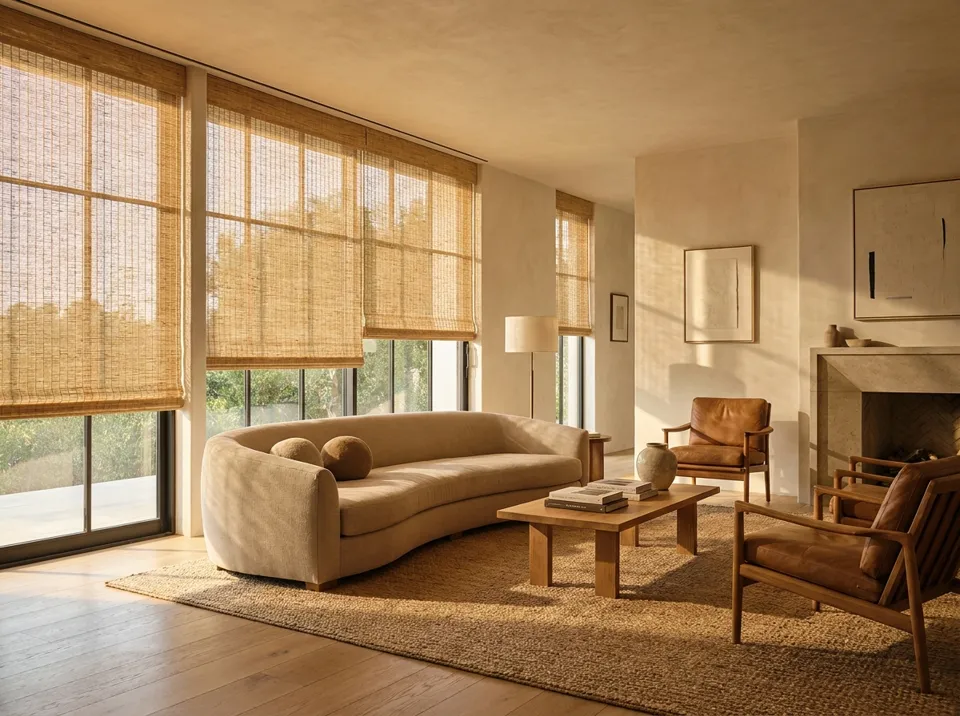
Custom window treatments for split-level homes in Auburn, WA have to solve more than light control. This 2026 guide shows how to match each opening to the right shade, plan difficult-to-reach windows, and move from local measurement to supplier order and installation with Rainier Blinds' custom window treatment services.
TL;DR
- Custom window treatments for split-level homes in Auburn, WA: cellular shades are the Buy for insulation.
- Roller shades are the Buy for living rooms: choose sunscreen, light-filtering, or blackout by room.
- Day/night and dual shades are Consider picks when one room needs two light settings.
- Measure every opening before the supplier order; Rainier Blinds installs with its own crew.
2026 project checkpoints
Why this matters
A split-level home gives you several window problems in one project. A living-room opening can need glare control, a bedroom can need darkness, and a stair landing can be too high for comfortable daily operation. Treating every window the same usually leaves at least one room with the wrong privacy or light level.
Auburn and the wider South King County area include older openings, remodeled rooms, tall glass, and specialty shapes. The useful question in 2026 is not which shade looks best in a sample photo. It is which treatment fits the opening, solves the room's problem, and will be easy to operate after installation.
Rainier Blinds' approach is straightforward: measure in the home, order the finished treatment from a supplier, and install it with the company's own crew. That is different from manufacturing the shades in-house, and it gives you a clear process to evaluate before you order.
Who this is for
This guide is for homeowners in Auburn, West Auburn, Lea Hill, Lakeland Hills, Auburn Highlands, and nearby South King County communities with a split-level, daylight basement, or home with multiple elevations. It fits a replacement project, a remodel, or a new purchase where the windows do not all behave the same way.
You will get the most from this guide if you have one or more of these problems: afternoon glare, early morning light, cold glass, street-facing windows, a stairwell opening, a skylight, an angled window, or furniture that blocks the normal reach path. Start with the hardest opening, not the easiest one.
What to look for in custom window treatments for Auburn split-level homes
Measure the opening, not just the room
Custom window treatments begin with the opening's actual width, height, depth, trim, handles, and nearby obstructions. A split-level project often has different casing conditions from one floor to the next, even when the windows look similar from across the room.
Measure every opening before the supplier order. Rainier Blinds' custom window treatments are made to the measurements taken for the project, so a complete opening list is more useful than a single sample measurement or a stock-size guess.
Assign a light job to each room
Choose the room's job before choosing a fabric. Sunscreen roller shades reduce harsh glare while keeping more of the view, light-filtering roller shades soften daylight for everyday spaces, and blackout roller shades are the direct choice when a bedroom or media room needs deep darkness.
Cellular shades give you another route when insulation and light control belong together. For a split-level home in 2026, use light-filtering fabric where the room should stay bright and blackout fabric where sleep or screen viewing matters. Do not make one opacity serve the whole house.
Plan high, stair, and specialty windows first
The difficult window can determine the rest of the project. A stair landing, two-story opening, skylight, trapezoid window, or arched window may need motorization, an outside mount, or a treatment designed for the shape instead of a standard rectangular shade.
Skylight shades address roof glass and hard-to-reach openings. Trapezoid shades fit angled tops, while arched shades follow a curved upper opening. Get these windows measured before selecting a matching look for easier rooms; the hardware and mount depth need to work first.
Set the mount and depth before ordering
Inside mount keeps a treatment within the casing when the opening has enough depth. Outside mount overlaps the trim and can create more room for a deeper headrail, a motor, or better edge coverage. Neither option is automatically better for every split-level window.
Window cranks, handles, trim, and nearby walls all affect the decision. Set the mount during the in-home measurement, not after the fabric has been ordered. This is especially important for cellular, dual, Roman, and motorized treatments with more hardware at the top.
Choose one layer or two
A single shade is clean and practical when one light setting does the job. Zebra shades use alternating sheer and solid bands for adjustable privacy, while day/night shades combine sheer and blackout layers. Dual shades place sunscreen and blackout fabrics on one roller system for a wider range of control.
Drapery or curtains can add a second layer around a large living-room opening. Use the combination when the room needs daytime glare control and a softer evening finish, but measure the shade and curtain hardware together so the brackets and rod projection do not compete for the same space.
Pick operation for the hardest window
Manual cordless operation works well for reachable windows that you adjust occasionally. Motorized operation earns its place on stair landings, tall glass, skylights, openings behind furniture, and windows that need a repeatable daily routine.
Rainier Blinds offers manual, motorized, and smart shade packages. The services page lists compatibility with Apple Home, Alexa, Google Home, and SmartThings for smart options. Decide the operation before the supplier order because the motor, power choice, and headrail affect the finished fit.
Top picks for split-level homes in Auburn
Cellular shades: the insulation pick
Cellular shades are the safest choice when older glass, uneven room comfort, or a bedroom that feels cold is the main complaint. Their honeycomb construction traps air, and the same product line can be specified with light-filtering or blackout fabric.
Use light-filtering cellular shades in a family room or office that still needs daylight. Use blackout cellular shades in a bedroom or media space where darkness matters. Verdict: Buy when insulation is part of the problem, not just appearance.
Roller shades: the practical pick
Roller shades win on clear choices and clean lines. Sunscreen, light-filtering, and blackout fabrics cover three different jobs without forcing the same room behavior across the whole house.
Choose sunscreen roller shades for a view-facing room with direct glare, light-filtering roller shades for living areas and kitchens, and blackout roller shades for bedrooms. Verdict: Buy for most reachable windows when the room's opacity is easy to define.
Zebra, day/night, and dual shades: the two-setting pick
These products make sense when one room changes function during the day. Zebra shades shift between sheer and solid bands; day/night shades move between sheer and blackout layers; dual shades combine sunscreen and blackout fabrics on one system.
The specification that matters is the layer combination, not the label alone. If the room needs a view and glare control in the afternoon but privacy or darkness after sunset, these products reduce the need to choose one permanent setting. Verdict: Consider for living rooms, bedrooms, and street-facing windows with changing light needs.
Skylight, trapezoid, and arched shades: the specialty-window pick
Specialty shades solve the openings that make a split-level project difficult. Skylight shades handle roof glass, trapezoid shades follow angled windows, and arched shades cover a curved top instead of leaving the shape exposed.
These are not the place to start with a stock-size assumption. The important specification is the shape and reach plan: how the shade mounts, how it operates, and how the fabric sits against the opening. Verdict: Consider after an on-site measurement confirms the shape and hardware path.
Woven wood shades, Roman shades, and drapery: the finish pick
Woven wood shades add natural texture, Roman shades add tailored fabric folds, and drapery or curtains frame a larger opening with a softer layer. These treatments can make a main living space feel finished without giving up room-specific light control.
Ask how the lining, mount depth, and hardware will work with the window. A textured shade still needs the right privacy and light behavior for the room. Verdict: Consider when the goal is a more layered finish and the measurement plan is already settled.
What to avoid
A single plan for every floor
A split-level home is not one repeated window. The landing, bedroom, living room, and lower-level opening can need different mounts, fabrics, and operating methods. A whole-house plan that ignores those differences creates the most trouble at the windows you use least often but need to work every day.
One opacity across the whole house
Blackout is useful where sleep or screen viewing requires it, but it can make a living room unnecessarily dark. Sunscreen can protect a view from glare, but it is not the correct answer when a bedroom needs deeper darkness at night. Assign the light problem room by room.
Confusing local installation with in-house manufacturing
Custom does not mean the local installer manufactures the treatment. Rainier Blinds measures each opening, places the order with a supplier, and installs the finished shades with its own crew. Ask who measures, who orders, who installs, and what coverage applies before you compare proposals.
Verdict comparison
| Treatment | Best split-level use | Main job | Verdict |
|---|---|---|---|
| Cellular shades | Bedrooms, lower-level rooms, older glass | Insulation and room-specific opacity | Buy |
| Roller shades | Living rooms, kitchens, reachable windows | Clear glare, privacy, and darkness choices | Buy |
| Zebra, day/night, or dual shades | Rooms with changing light | Two light settings on one system | Consider |
| Skylight, trapezoid, or arched shades | High, angled, or curved openings | Shape fit and safer reach | Consider after measure |
| Woven wood, Roman, or drapery | Main living spaces | Texture and layered finish | Consider |
| Outdoor shades | Covered patios and exterior rooms | Exterior sun and exposure control | Measure first |
How the Auburn measure-to-install process works
- Start with the project list. Count the openings, note which rooms need darkness or privacy, and mark the windows that are high, angled, or blocked by furniture. Rainier Blinds' quote page says requests receive a response within 1 business day.
- Review the local service area. Auburn is Rainier Blinds' home base. Use the Auburn service area page for local coverage; nearby homeowners can also check the Kent service area page.
- Measure in the home. The measurement should capture width, height, depth, trim, handles, mount choice, and operating access for every opening. Bring up specialty shapes and motorization before the order is placed.
- Order from the supplier. Rainier Blinds does not manufacture the shades in-house. The supplier produces the ordered treatment to the measured specifications, while Rainier Blinds remains responsible for the local project process.
- Install and review the result. Rainier Blinds returns with its own crew to install the treatments and handle motor setup or smart-home pairing when included. The quote page says most projects are installed within 3-4 weeks of ordering, and the site lists warranty coverage of up to 5 years depending on the package.
For current project pricing, use the request a quote page after the window list and room priorities are ready. A measured quote gives you a useful comparison; a stock-size estimate does not.
FAQ
What's the best custom window treatment for a split-level home in Auburn, WA?
How do you cover a high stair landing window?
Are cellular shades a good choice for older Auburn homes?
Should a bedroom use blackout or light-filtering roller shades?
How much do custom window treatments cost in Auburn, WA?
How long does it take to install custom shades in Auburn?
Does Rainier Blinds manufacture the shades?
Can one shade type work for every room in a split-level house?
One last thing
Design the most awkward window first. In a split-level home, the window that causes the most frustration is often the one beside a stair, behind furniture, or inside an angled opening, not the largest pane in the house. Solve its measurement, mount, and operation in 2026, then repeat the look where the openings are easier.
Rainier Blinds custom window treatments work best when the project is treated as a room-by-room measure, supplier order, and installation plan. That is how you avoid paying for a finish that looks right in a sample but does not work at the window.