
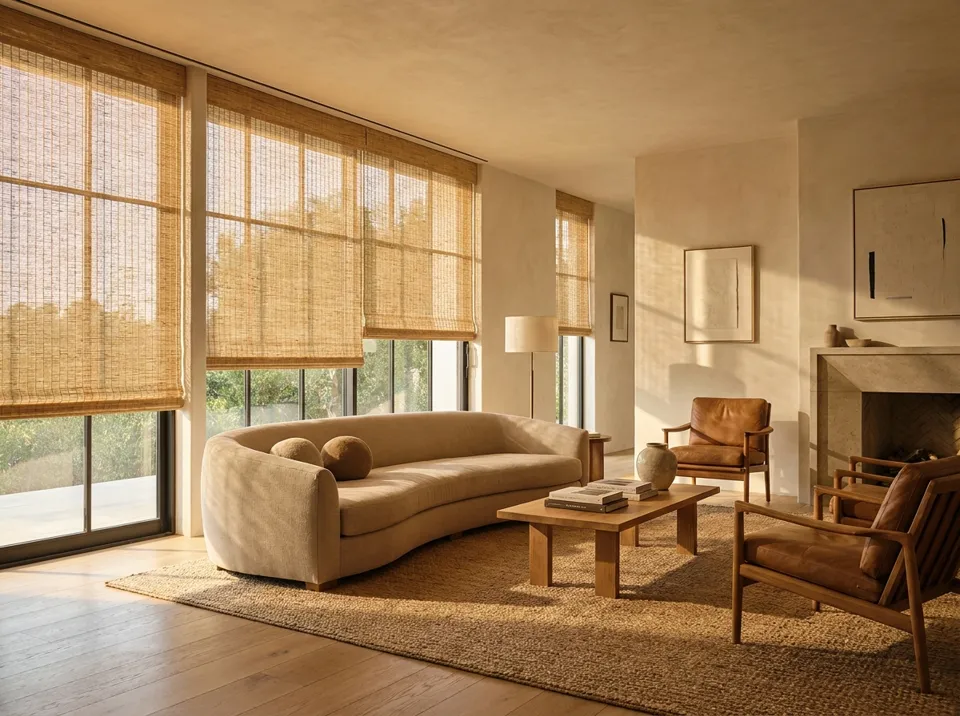
Custom window treatments in Lea Hill, Auburn, WA work best when each room gets the right answer to its own light, privacy, and comfort problem. This 2026 guide covers the practical choices for established Lea Hill homes, from sunscreen roller shades on bright glass to cellular shades, layered drapery, and made-to-fit specialty shades; start with the local Auburn service area when planning an in-home consultation.
TL;DR
- Custom window treatments Lea Hill Auburn WA: light-filtering roller shades are the Buy for most day rooms in 2026.
- Cellular shades are the Buy for insulation-first rooms; blackout roller shades are the Buy for bedrooms.
- Zebra, day/night, and dual shades are Consider picks when one window needs two light settings.
- Rainier Blinds measures, has shades custom-made by a supplier to confirmed measurements, and installs with its own crew.
Why this matters in Lea Hill
Lea Hill homes can combine older window openings, changing room additions, tall living-room glass, and bright exposures in one project. That makes a single product decision for the whole house a bad shortcut. A daylight-focused room needs a different treatment from a bedroom, a high entry opening, or an outdoor living area.
The right 2026 plan begins with what is failing at each window. Is the issue direct afternoon glare, a room that feels too exposed after dark, early light in a bedroom, cold glass in winter, or a shade that no one can comfortably reach? Once that answer is clear, the fabric, mount, operation, and hardware become much easier to choose.
Rainier Blinds is based in Auburn and handles the consultation, measurement, and installation with its own crew. The selected treatment is custom-made by a supplier to confirmed measurements. That is a more useful distinction than vague claims about custom work: the same local team checks the opening before the order and installs the finished product after it arrives.
Who this guide is for
This guide is for Lea Hill homeowners replacing dated window coverings, furnishing a new-to-them home, remodeling a room, or fixing one difficult opening. It also applies to South King County buyers who want a local measurement and installation process rather than a self-measured online order.
The product scope is clear: sunscreen, light-filtering, and blackout roller shades; cellular shades; zebra shades; woven wood shades; Roman shades; day/night shades; dual shades; skylight shades; trapezoid shades; arched shades; outdoor shades; and drapery or curtains. The room and opening decide which one earns its place.
What to look for in Lea Hill window treatments
Start with the measure, not the fabric swatch
A real measure checks width, height, casing depth, trim, handles, locks, cranks, furniture clearance, and the space required for the selected headrail or motor. It also identifies whether inside mount or outside mount creates the cleaner finished result.
Inside mount keeps the treatment within the opening when there is enough depth. Outside mount overlaps the trim and often gives deeper hardware more room while improving edge coverage. Neither option is automatically better. The frame, product, and light-control goal settle the choice before the supplier order is placed.
Match the opacity to the room's job
Roller shades offer three useful fabric lanes. Sunscreen fabric reduces glare while keeping more of the view. Light-filtering fabric softens daylight and supports daytime privacy. Blackout fabric is the correct starting point for bedrooms, media rooms, and daytime sleep.
Do not use one opacity everywhere because it is easy. A sunscreen roller shade is effective on a bright day room where the view matters, but it is not the right answer for a room that needs darkness. Blackout fabric solves early light but can make a living room feel closed. In 2026, choose fabric by the condition that makes the room uncomfortable.
Give insulation its own decision
Cellular shades use a honeycomb construction that adds an insulating air layer at the glass. They are the practical choice when room comfort and older window performance matter more than a thin, flat fabric profile. Light-filtering cellular shades fit many daytime spaces; blackout cellular shades fit bedrooms and media rooms.
Cellular shades need enough mounting depth, especially when the project includes a motor. If the opening is shallow, outside mount can provide a cleaner installation and better coverage. The point is not to force a product into the casing. It is to make the finished treatment operate smoothly and look intentional.
Plan changing-light windows for two settings
Zebra shades use alternating sheer and solid bands to adjust privacy and filtered light. Day/night shades pair a lighter layer with a darker layer. Dual shades place two fabrics, such as sunscreen and blackout, on one roller system.
These are not automatic upgrades for every room. They earn the extra hardware when the same window needs clear daytime function and deeper evening control. A main living room, home office, or bedroom that changes roles through the day is a strong candidate. A simple guest room may only need a single blackout roller shade.
Treat height and reach as design inputs
Manual cordless operation suits windows that are easy to reach and only need occasional adjustment. Motorization is the direct answer for tall entry glass, skylights, stairwell openings, windows behind furniture, and rooms where a daily schedule matters.
Rainier Blinds lists the Motorized package at +$100 per shade and the Smart package at +$200 per shade. Standard, Motorized, and Smart packages carry 1-year, 3-year, and 5-year warranties respectively. Choose the operation before the treatment is ordered because power options and headrail depth affect the final plan.
Respect specialty shapes and exposure
Skylight shades address roof glass and difficult reach. Trapezoid shades follow angled openings, while arched shades are measured to work with the actual curve and usable coverage area. These are measure-first products. A rough width and height cannot account for slope, trim, operating position, or hardware clearance.
Outdoor shades are also their own category. Steel-wire guided systems suit covered spaces where a clean, wind-resistant side guide is enough. Zipper-track systems use enclosed side tracks where more protection from wind, rain spray, and insects is needed. The mounting surface and exposure set the hardware, not a photo of a finished patio.
Know who does each part of the work
Before approving any custom window treatment project, ask who measures, who manufactures, and who installs. Those answers prevent misunderstandings after a fabric or motor has been selected.
Rainier Blinds does not manufacture shades or drapery in-house. The company measures the openings, has the selected treatment custom-made by a supplier to confirmed measurements, and installs the finished order with its own crew. That keeps the local team responsible for fit, operation, and the finished installation.
Top picks for Lea Hill homes in 2026
The day-room default: light-filtering and sunscreen roller shades
The safe pick. Light-filtering roller shades are the strongest starting point for living rooms, kitchens, dining areas, and everyday offices. They soften direct daylight without giving the room a heavy look. Sunscreen roller shades are the better call on bright glass where glare is the first complaint and preserving more of the view matters.
The available window treatment services include both roller shade fabric directions. Verdict: Buy light-filtering roller shades for most Lea Hill day rooms; select sunscreen fabric when glare and view control take priority, and blackout fabric when the room needs deeper darkness.
The comfort pick: cellular shades
The insulation pick. Cellular shades are the right first choice for rooms where cold glass, uneven comfort, or winter privacy drive the project. Their honeycomb structure gives them a job beyond looks. They also work well when a simple, cordless shade is enough.
Confirm casing depth and mount before finalizing the cell construction or motor option. A measure that includes the trim and handles protects the final fit. Verdict: Buy cellular shades for insulation-first rooms and bedrooms where blackout performance is needed.
The flexible pick: zebra, day/night, and dual shades
The two-setting pick. Zebra shades are effective when adjustable filtered light and privacy need to live in one treatment. Day/night shades and dual shades are better when the homeowner needs two genuinely different fabrics, such as filtered daylight and blackout coverage.
Choose these systems where the room changes function every day, not simply because they sound more advanced. They require hardware and depth that should be decided at the measure. Verdict: Consider zebra shades for adjustable privacy; Buy day/night or dual shades when one room needs light control at two distinct levels.
The finished-room pick: woven wood, Roman shades, and drapery
The texture pick. Woven wood shades add natural texture, while Roman shades add a tailored fabric finish. Drapery or curtains can frame wider openings, add a second light-control layer, or soften a living or dining room that needs more visual weight.
For motorized or scheduled window treatments, review the current smart shades options during the consultation. Verdict: Buy woven wood, Roman shades, or drapery when the room needs finish and layering rather than a one-size-fits-all treatment.
The hard-window pick: specialty and outdoor shades
The practical pick. Skylight, trapezoid, and arched shades belong on openings where a standard rectangle would not produce usable coverage. Outdoor shades belong where exterior heat, glare, wind, or insects make the space less usable.
For exterior projects, compare the steel-wire and zipper-track systems on the verified outdoor shades page. Verdict: Buy after an on-site shape and exposure check. The measurement is part of selecting the product, not a final paperwork step.
What to avoid
Ordering from one self-measured number
A centerline width misses casing depth, out-of-square frames, trim, handles, locks, and motor clearance. A treatment that is too narrow can leave disruptive side light; a treatment that is too wide can bind or crowd the trim. Get every opening measured before approving the final fabric and mount.
Choosing the product before checking the mount
Cellular, dual, Roman, and motorized systems all need more room than a thin manual roller shade. A shallow casing can make an outside mount the correct choice even when the width looks workable. Mount is not an afterthought. It decides headrail clearance, edge coverage, and whether the treatment moves cleanly every day.
Treating outdoor conditions like indoor conditions
A shade under a covered overhang has different needs from one exposed to wind and rain spray. The guide system, mounting surface, fabric, and operation should be selected for the actual exposure. Choosing the lowest-profile option without checking that exposure can leave an outdoor room less usable, not more.
Verdict comparison
| Window treatment | Best Lea Hill use | Main job | Verdict |
|---|---|---|---|
| Light-filtering roller shade | Living rooms and kitchens | Soft daylight and daytime privacy | Buy |
| Sunscreen roller shade | Bright view windows | Glare control while keeping more view | Buy |
| Blackout roller or cellular shade | Bedrooms and media rooms | Deeper darkness with planned edge coverage | Buy |
| Cellular shade | Insulation-first rooms | Added air layer at the glass | Buy |
| Zebra, day/night, or dual shade | Changing-light rooms | Two useful light settings | Consider or Buy |
| Woven wood, Roman shade, or drapery | Finished living and dining rooms | Texture and layered finish | Buy for finish |
| Specialty or outdoor shade | Angled, roof, and exposed openings | Shape-specific or exposure-specific control | Buy after measure |
How the local process works
Rainier Blinds keeps the project sequence direct in 2026:
- Consult: Identify the rooms, light problems, privacy needs, opening height, and any motorization or smart-home plan.
- Measure: The local crew checks every opening, mount option, depth, obstacle, specialty shape, and outdoor mounting surface.
- Select and order: Choose the product, fabric, operation, and hardware. Your selections are submitted to the supplier, which custom-makes the treatment to your exact measurements.
- Install: Rainier Blinds' own crew installs the finished order, checks movement and clearance, and completes motor or smart-home setup when selected.
This separates each responsibility cleanly. The local crew measures and installs. The supplier manufactures to the confirmed order. The homeowner does not have to turn rough notes or phone measurements into a final specification.
For a broader comparison of nearby needs and product categories, read the South King County custom window treatments guide. Exact project pricing depends on the product, fabric, dimensions, mount, operation, window count, and any specialty hardware.
FAQ
What are the best custom window treatments for Lea Hill Auburn WA homes in 2026?
How much do custom window treatments cost in Lea Hill, Auburn?
Are cellular shades better than roller shades for Auburn homes?
What window treatments work for tall Lea Hill windows?
Can custom shades fit skylight, trapezoid, and arched windows?
Should I choose motorized or manual shades?
Does Rainier Blinds make custom shades in-house?
Are outdoor shades worth it in Auburn, WA?
One last thing
The biggest missed decision is not the fabric color. It is the operating plan. A manual shade only solves a problem if it is easy to reach and people will use it. In 2026, reserve motorization for windows that are high, hidden, heavy, or scheduled, then keep simple rooms simple.
Map the house by problem before mapping it by color: sunscreen on harsh bright glass, light-filtering fabric in day rooms, cellular construction where comfort matters, blackout fabric where sleep matters, and specialty products on unusual openings. That gives the measurement visit a clear job and produces a window treatment plan that works after installation.