
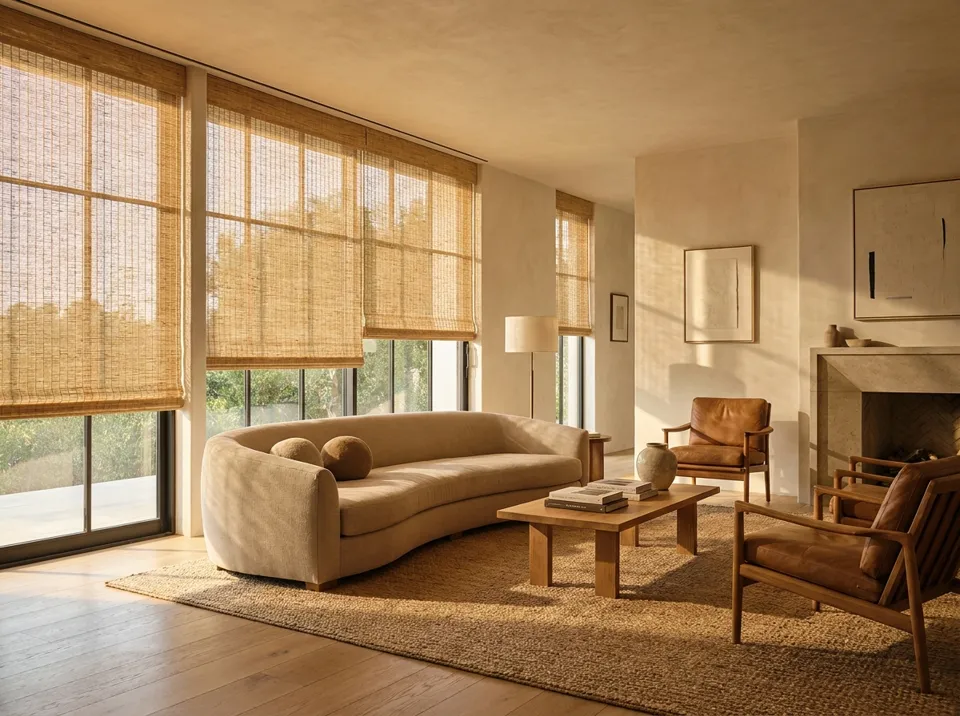
Custom window treatments in East Hill, Kent, WA need to handle standard vinyl windows, street-facing privacy, changing daylight, and the larger living-room glass common in newer homes. This 2026 guide gives a room-by-room way to choose the right shade or drapery before a local measure and installation.
TL;DR
- Custom window treatments East Hill Kent WA homeowners choose start with roller shades for most day rooms in 2026.
- Cellular shades are the Buy for insulation-first rooms; blackout roller shades are the Buy for bedrooms.
- Zebra, day/night, and dual shades earn their added hardware when one window needs two daily light settings.
- Rainier Blinds measures your windows, has shades custom-made to your exact measurements, and installs the finished treatment with its own crew.
Why this matters
East Hill homes often put different window jobs under the same roof. A first-floor living room can need daytime glare control and privacy after dark. A bedroom can need a darker sleep environment. A stairwell, skylight, or angled opening can require an operating method that a standard window does not.
The practical mistake is choosing one product and one opacity for every room. A light-filtering roller shade is a strong living-room choice and a weak bedroom choice. A blackout shade makes sense for sleep and can leave a kitchen unnecessarily dark at noon. In 2026, custom window treatments work best when each room's problem is named first.
The other decision is fit. East Hill includes established homes and newer construction, and casing depth, trim, handles, and window shape vary from one opening to the next. A measured treatment has to clear the frame, operate without rubbing, and cover the light gap that matters. That is why the local Kent service area starts with an in-home consultation rather than a stock-size chart.
Who this guide is for
This guide is for East Hill homeowners replacing worn coverings, finishing a remodel, moving into a new home, or solving a specific room that never feels right. It is also for people who want a direct process: consult, measure, custom fabrication, install.
Rainier Blinds is not a manufacturer. Rainier Blinds measures each opening, helps select the product and operation, and has the finished shade or drapery custom-made to your exact measurements, then installs it with its own crew. A wholesale supplier manufactures the shade or drapery to specification; the local crew owns the measurement and installation work.
What to look for before ordering
Start with the room's failure
Write down what fails at the window: glare on a screen, lack of privacy at night, early light in a bedroom, cold glass, difficult reach, or an awkward shape. That one sentence narrows the product choice faster than color samples do.
For example, sunscreen roller shades are for glare control while retaining more of the view. Light-filtering roller shades soften daylight and support daytime privacy. Blackout roller shades are for rooms where darkness is the job. Cellular shades bring an insulating honeycomb layer to rooms where comfort at the glass matters.
Confirm inside or outside mount
Inside mount keeps the treatment within the casing when there is enough depth for the headrail and hardware. Outside mount overlaps the trim and often gives deeper products more room to operate. It can also reduce the bright edge that shows when an inside-mounted shade sits within a slightly uneven opening.
The crew should check width at the top, middle, and bottom, then confirm height, depth, trim, handles, locks, cranks, nearby furniture, and door travel. Three width readings catch a frame that is not perfectly square. That is a fit check, not an extra step.
Pick opacity room by room
Opacity is function, not decoration. A room with afternoon screen glare may need sunscreen fabric. A main living area may need light filtering. A bedroom used for daytime sleep may need blackout fabric plus enough side overlap to reduce edge glow.
Do not expect one mid-opacity fabric to handle every task. In 2026, the useful whole-home package is usually mixed: light-filtering day rooms, stronger privacy on street-facing windows, and blackout where sleep is the first priority.
Decide manual, motorized, or smart operation early
Manual operation works well on reachable windows that are adjusted occasionally. Motorization is a practical choice for tall glass, windows behind furniture, skylights, stairwells, and windows that need a consistent routine. Smart operation is the right choice when app or home-automation control will be used regularly.
Rainier Blinds lists Motorized at +$100 per shade and Smart at +$200 per shade on its window treatment services page. Those are per-shade package add-ons; the final project price depends on the measured opening, product, fabric, and order scope. Choose the operation before custom fabrication because the headrail and power choice can change the installation plan.
Check specialty openings before choosing fabric
Skylight shades, trapezoid shades, and arched shades need an on-site check of the actual shape, mounting surface, usable coverage, and operating clearance. Outdoor shades also need the crew to assess the mounting structure and exposure before choosing a steel-wire guide or zipper-track system.
A rough width is not enough for a specialty opening. The shape and the mounting surface decide what will work.
Best custom window treatments for East Hill homes
Light-filtering roller shades: the day-room default
Buy. Light-filtering roller shades are the practical first choice for living rooms, kitchens, dining spaces, and home offices. They soften daylight, reduce the hard look of uncovered glass, and keep a low-profile appearance that suits standard windows.
Sunscreen roller shades are the better choice when glare is the main problem and maintaining more of the view matters. Blackout roller shades belong in bedrooms, media rooms, and rooms used for daytime sleep. Before ordering blackout, ask about the mount and edge coverage; opaque fabric does not solve a bright side gap by itself.
For a broader comparison across the local market, see custom window treatments in South King County. Verdict: Buy roller shades when a single, clean fabric treatment solves the room.
Cellular shades: the insulation-first pick
Buy when comfort at the glass is the first job. Cellular shades use honeycomb construction to trap air and come in light-filtering and blackout options. They fit bedrooms, cooler rooms, and windows where a flat roller profile is less important than an extra insulating layer.
The key is depth. A cellular headrail and cell stack need more clearance than a thin roller shade. If an inside mount is shallow, an outside mount can be the cleaner and more usable answer. For the full local comparison of cell construction, opacity, and mount depth, review cellular shades in Auburn, WA.
Verdict: Buy cellular shades for bedrooms and comfort-focused rooms after confirming the casing depth.
Zebra shades: the privacy-and-view pick
Consider, then buy when the room needs two positions every day. Zebra shades use alternating sheer and solid bands, letting the user align for filtered daylight or overlap for more privacy. They are a strong fit for street-facing living rooms and home offices that need daylight during work hours and more privacy after dark.
Zebra shades do not replace a sealed blackout solution for a room that must be very dark. If a bedroom needs both a daytime sheer setting and deeper nighttime darkness, a day/night or dual shade is often the clearer choice. The extra hardware earns its place only when both settings will actually be used.
Verdict: Consider zebra shades for first-floor rooms that move between daylight, view, and privacy.
Day/night and dual shades: the two-fabric solution
Buy when one opening needs two distinct fabrics. Day/night shades combine lighter and darker layers, while dual shades use two fabrics on one system, such as sunscreen for the day and blackout for the evening. This works well in a room that is bright and active during the day but needs strong darkness later.
These systems require more planning than a simple roller shade. Mount depth, headrail space, operating method, and the exact fabric pair all matter. Keep the product simple if one fabric already solves the room; add the second layer only when the room has two real jobs.
Verdict: Buy day/night or dual shades for changing-light rooms where one fabric would force a compromise.
Woven wood, Roman shades, and drapery: the finished-room choices
Buy when texture, softness, or a layered result matters. Woven wood shades add a natural textured face to living and dining rooms. Roman shades offer a tailored fabric fold. Drapery or curtains can frame wide windows, add a second privacy layer, and soften a room with hard floors or large glass.
The useful decision is functional: choose light-filtering or privacy lining for day rooms and blackout lining for bedrooms. When drapery is layered with a shade, measure the rod or track, shade depth, handles, and stack-back space as one plan. A good fabric choice still fails if the panels cannot clear a door or the underlying shade.
Verdict: Buy these options when the room needs a finished layer as well as light control.
Specialty and outdoor shades: the problem-opening choices
Buy after a measured review. Skylight shades solve roof-glass reach. Trapezoid shades follow angled windows. Arched shades cover curved openings. Outdoor shades manage sun and weather at the exterior before those conditions affect the room inside.
Outdoor shades are available with steel-wire and zipper-track systems. The right system follows the opening, mounting surface, and exposure, not a quick online measurement. Verdict: Buy only after the measure confirms the opening and operating plan.
What to avoid
Choosing one treatment for every room
A whole-house single-product plan looks easy on paper and often performs badly in daily use. The bedroom needs darkness; the office needs glare control; the living room may need flexible privacy; a cooler room may need cellular insulation. Separate those jobs before fabric selection.
Ordering before the mount is decided
A deeper cellular, Roman, dual, or motorized headrail may not work within a shallow casing. Outside mount is not a lesser choice when it gives the treatment room to move and improves side coverage. Decide mount type during measurement, before custom fabrication begins.
Treating zebra shades as full blackout
Zebra shades offer adjustable privacy and filtered daylight. They are not designed to seal every edge like a dedicated blackout solution. If sleep darkness is the non-negotiable job, choose blackout roller or cellular fabric with the right mount, or specify a day/night or dual system.
Measuring a specialty opening from one number
An angled, arched, skylight, or exterior opening needs more than width and height. Shape, mounting surface, usable coverage, guide hardware, and reach all affect the order. Measure the real opening before fabric is selected.
East Hill comparison table
| Option | Best East Hill use | Main job | Verdict |
|---|---|---|---|
| Light-filtering roller shade | Living rooms, kitchens, offices | Soft daylight and daytime privacy | Buy |
| Sunscreen roller shade | Glare-heavy rooms with a view | Glare control | Buy |
| Blackout roller shade | Bedrooms and media rooms | Darkness with planned edge coverage | Buy |
| Cellular shade | Cooler rooms and bedrooms | Insulating air layer | Buy |
| Zebra shade | Street-facing rooms | Adjustable privacy and daylight | Consider |
| Day/night or dual shade | One opening with two light jobs | Lighter and darker fabric settings | Buy when used daily |
| Woven wood, Roman shade, or drapery | Living and dining rooms | Texture and a finished layer | Buy for finish |
| Specialty or outdoor shade | Angled, roof, arched, or exterior openings | Shape, reach, and exposure | Buy after measure |
How the East Hill measure, custom fabrication, and install process works
Rainier Blinds keeps the process direct:
- Consult: identify the room, light problem, privacy need, opening count, and whether manual, motorized, or smart operation makes sense.
- Measure: the crew checks width at three points, height, casing depth, trim, handles, doors, specialty shapes, and exterior mounting surfaces.
- Custom fabrication: the product, fabric, operation, and hardware are confirmed, then the supplier manufactures the treatment to your exact measurements.
- Install: Rainier Blinds' own crew mounts the finished shade or drapery, checks movement and clearance, and completes motor or smart setup when selected.
The quote page states that new requests receive a response within 1 business day and that most projects are installed within 3-4 weeks of ordering. Exact timing depends on the selected treatment and supplier schedule. Use the quote request once the room priorities and opening count are ready.
FAQ
What are the best custom window treatments in East Hill, Kent, WA in 2026?
Are roller shades or cellular shades better for East Hill homes?
What shades work best for street-facing East Hill windows?
Can custom window treatments fit skylight, trapezoid, and arched windows?
Should East Hill homeowners choose motorized or manual shades?
How much do custom window treatments cost in East Hill, Kent?
Does Rainier Blinds manufacture shades in-house?
One last thing
The best time to choose a fabric is when the room is failing, not when the sample book is open. Check the west-facing room when afternoon glare is strongest, check the bedroom when early light is the problem, and check the street-facing room after dark with the lights on. That practical test tells you whether the room needs sunscreen, light filtering, blackout, insulation, adjustable bands, or a second layer.
In 2026, the strong East Hill plan is not the one with the most features. It is the one where the product, mount, fabric, and operation all solve the window's actual job.