
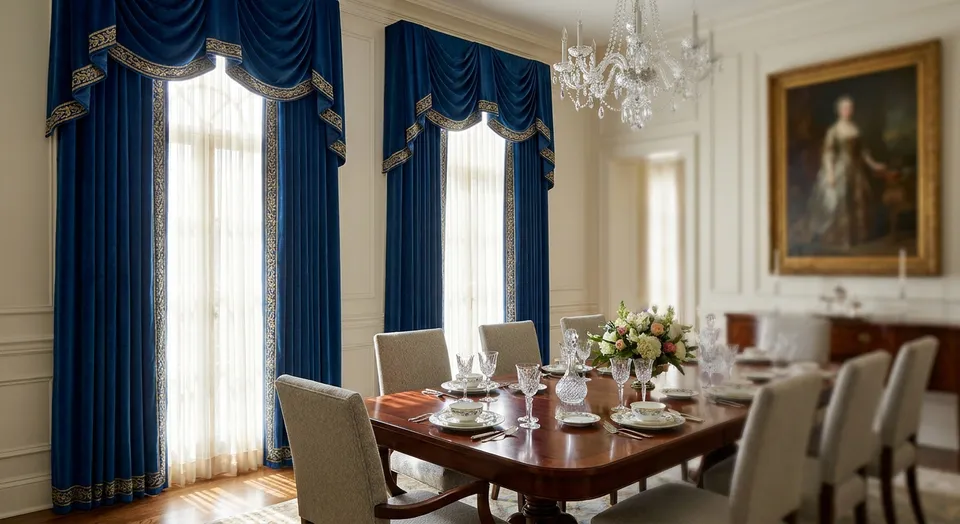
Formal dining rooms get one shot at making an impression, and bare or mismatched windows undercut everything else in the room. This guide breaks down what actually matters when you're picking custom drapery for dining rooms in 2026, fabric weight, fullness, length, and light control, plus which combinations hold up in a room that's used for two hours a night and stared at the rest of the time.
- Pinch pleat drapery panels at a 2.5x fullness ratio is the safe buy for most formal dining rooms in 2026.
- Layering drapery over a roman shade solves the glare-and-privacy problem in south- and west-facing dining rooms.
- Skip puddled hems in dining rooms with kids or pets. Floor-length break is the practical standard.
- Custom drapery for dining rooms typically runs 8-12 weeks lead time once fabric and hardware are confirmed.
Why this matters
A formal dining room window gets judged twice: once at dinner parties under overhead light, once during the day when sun hits the table and glares off glassware. Drapery has to work both shifts.
Most homeowners in the Auburn and South King County area default to whatever hung in the room before, usually thin ready-made panels that don't reach the floor and don't block afternoon glare. Rainier Blinds handles custom drapery installations across Auburn and sees the same mismatch repeatedly: a $3,000 dining table under a $40 curtain panel from a big-box store.
Getting the fabric, fullness, and length right isn't decorative fussiness. It's the difference between a room that photographs well and one that looks unfinished the second guests sit down.
Who this is for
This guide is for homeowners with a dedicated formal dining room, not an eat-in kitchen nook, who want drapery that reads as furniture-grade rather than functional-only. If the room hosts holiday dinners, has a chandelier, or sits off an entryway where guests see it first, the criteria below apply directly.
What to look for in custom drapery for dining rooms
Fabric weight and drape
Dining room drapery needs enough weight to hang in clean vertical folds, not float or cling to the wall. Linen-cotton blends in the 8-12 oz range hold pleats without stiffening into a board-like look. Lightweight sheers alone read as café curtains, not formal dining drapery. They belong under a heavier panel, not instead of one.
Fullness and pleat style
Fullness is the ratio of fabric width to the finished rod width, and it's the single biggest factor in whether drapery looks tailored or thin. A 2.5x ratio is the standard for pinch pleat and goblet styles in formal rooms; anything under 2x looks skimpy once the panel is hung and stationary. Choosing the right drapery fabric for the fullness you want matters more than most homeowners expect going in.
Length and hem
Floor-length break, where the panel just grazes the floor, is the standard for dining rooms with regular foot traffic, kids, or pets. Puddled hems (2-4 inches of extra fabric pooling on the floor) look luxurious in photos but collect dust and snag chair legs in a room people walk through daily.
Light control and lining
A west- or south-facing dining room window without lining will bleach fabric and fade a wood table within a few years. Blackout or thermal lining behind the decorative fabric protects the room's furniture and keeps the drapery itself from fading unevenly on the sun-facing side.
Hardware and rod placement
Rod placement 4-6 inches above the window frame and extending 6-10 inches past each side makes the window look larger and lets panels stack fully off the glass during the day. Undersized hardware is the most common reason custom drapery still looks cheap after installation.
Motorization
A motorized traverse track lets drapery open and close on a schedule or remote without a homeowner reaching over a table set for eight. It's a real upgrade for rooms with high ceilings or hard-to-reach rods, but it adds cost and isn't necessary for a standard 8-foot window.
Top picks for formal dining rooms
Pinch pleat linen-blend panels, the classic pick. Tailored triple-pleat header at a 2.5x fullness ratio, hung on a decorative rod with rings. This is the standard formal dining room look and the one that ages best across style trends. Custom drapery panels built at this fullness hold their shape for years without needing re-pressing. Buy for most traditional and transitional dining rooms.
Drapery layered over a roman shade. The light-control pick. Full-length drapery panels stacked over a fabric roman shade solves glare and privacy without sacrificing the formal look drapery alone provides. Roman shades paired with drapery give you a hard light-block during the day and a softer, layered look at night when the shade is raised. Consider this for any dining room with direct afternoon sun.
Motorized traverse rod drapery, the wildcard. Remote or app-controlled opening for high windows, bay windows, or rooms where reaching a rod means climbing over furniture. It's the right call for a 10-12 foot ceiling or a window flanked by a china cabinet on one side. Consider if reach is genuinely a problem; Skip if the window is a standard 8-foot opening a homeowner can reach fine by hand.
Get a real quote on dining room drapery
In-home measure and fabric consult with Rainier Blinds' own install crew.
What to avoid
- Ready-made panels from big-box stores. Standard 84-inch or 95-inch lengths almost never match a formal dining room's ceiling height or window proportions, and the fabric weight is usually too thin to hold a pleat.
- Sheer-only treatments with no lining in sun-facing rooms. They look elegant in a showroom and fade a dining table finish within two to three years of direct exposure.
- Puddled hems in high-traffic dining rooms. They look right in a magazine and wrong the first time a chair gets pushed back fast during dinner.
Verdict comparison
| Option | Fullness | Light control | Best for | Verdict |
|---|---|---|---|---|
| Pinch pleat linen panels | 2.5x | Moderate (add lining) | Traditional/transitional rooms | Buy |
| Drapery + roman shade layer | 2.5x drapery, tailored shade | High | South/west-facing windows | Consider |
| Motorized traverse drapery | 2.5x | Moderate to high | High ceilings, hard-to-reach rods | Consider/Skip |
FAQ
What is the best fabric for custom drapery in a dining room?
An 8-12 oz linen-cotton blend is the best fabric for formal dining room drapery in 2026 because it holds pleats without stiffening or sagging. Sheer fabrics work as an under-layer but shouldn't be the only treatment on the window.
How much fullness do dining room drapery panels need?
A 2.5x fullness ratio is standard for pinch pleat and goblet-style dining room drapery. Anything under 2x looks thin and flat once the panel is hung.
Should dining room drapery touch the floor?
A floor-length break, where the hem just grazes the floor, is the practical standard for dining rooms with regular foot traffic. Puddled hems look formal in photos but collect dust and snag chairs in daily use.
Is drapery or roman shades better for a formal dining room?
Drapery alone gives the most traditional formal look, but layering drapery over a roman shade adds real light control for south- or west-facing windows. The layered combination is the better pick when glare or furniture fading is a concern.
How long does custom drapery take to install in 2026?
Custom drapery typically takes 8-12 weeks from fabric selection to installation in 2026, depending on the fabric mill and hardware lead times. Measuring and consultation happen well before the fabric order ships.
Do I need lining on dining room drapery?
Yes, if the window faces south or west, blackout or thermal lining protects both the drapery fabric and dining room furniture from fading. Unlined sheers alone won't stop UV exposure on a wood table.
Is motorized drapery worth it for a dining room?
Motorized drapery is worth it for high ceilings, bay windows, or any rod that's hard to reach by hand, but it's an unnecessary cost for a standard 8-foot window a homeowner can reach easily.
What rod placement works best for formal dining room drapery?
Mounting the rod 4-6 inches above the window frame and extending it 6-10 inches past each side makes the window look larger and lets panels stack fully off the glass during the day.
One last thing
The detail most homeowners skip is fabric-matching the lining color to the room's wall paint, not just the drapery face fabric, from outside, a mismatched lining shows through as a visible seam of the wrong color every time the sun hits the window. It's a five-minute decision during the fabric consult and it's the difference between drapery that looks finished from the street and drapery that looks like an afterthought.