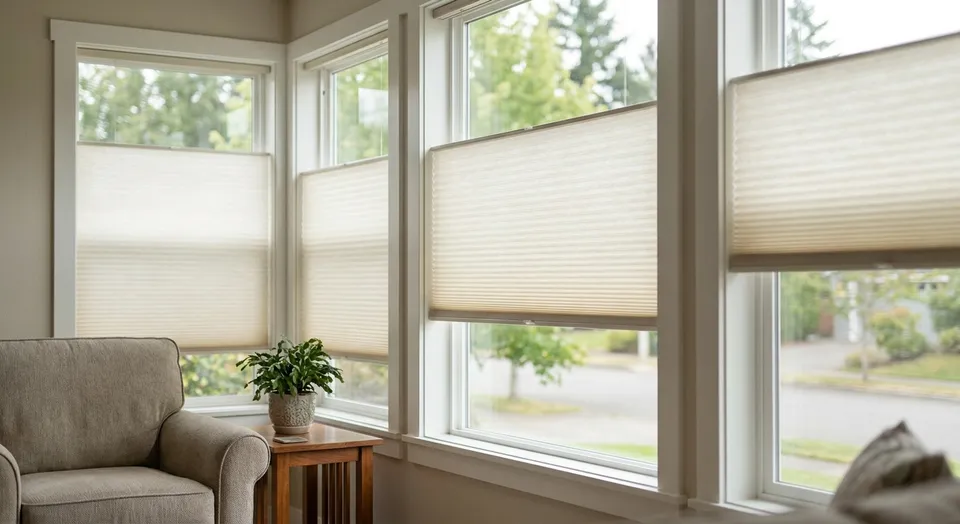
Federal Way homes fight two things year-round: heat loss through single-pane and dated dual-pane windows, and the total lack of privacy that comes with lots spaced 15 feet apart in neighborhoods like Twin Lakes and Redondo. Cellular shades solve both, and this guide names which cell depth, lift style, and light-control level actually earn a spot on your windows in 2026.
- Double-cell cellular shades are the buy for cellular shades federal way wa homes in 2026. They cut window heat loss up to 40%.
- Cordless lift is mandatory in any home with kids or pets under 10; corded single-cell shades are a Skip.
- Vinyl-look single-cell shades in daylight basements trap moisture. Federal Way's damp winters make that a mold risk.
- Motorized double-cell shades are a Consider, not a Buy, unless you already run a smart-home hub.
Why this matters
Windows are the weakest point in the thermal envelope of most Federal Way houses built before 2000, and the split-levels and daylight ranches common near Highway 99 tend to have more glass than newer builds relative to square footage. A honeycomb-shaped cellular shade traps air in its cell structure the same way a double-pane window traps air between glass, and that trapped air, not the fabric itself, is what drives the U.S. Department of Energy's commonly cited figure that cellular shades can cut heat loss through windows by up to 40%.
That matters more in 2026 than it did five years ago, because Puget Sound Energy rates have climbed and most of the homes Rainier Blinds measures in Federal Way still run their original 1980s and 1990s windows. Cellular shades are the cheapest fix that doesn't involve replacing glass.
Who this guide is for
This is for Federal Way homeowners with close-set lots, west-facing living rooms that overheat in July, or bedrooms near flight paths where shift workers need real blackout. It's for split-level owners in Twin Lakes and Redondo dealing with drafty single-pane basement windows, and for anyone comparing custom window treatments for Federal Way homes against what a big-box store or online retailer is quoting.
What to look for in cellular shades for Federal Way homes
Cell depth and insulation value
A single-cell shade with a 3/8-inch cell offers modest R-value gain; a double-cell shade with a 3/4-inch cell roughly doubles the trapped-air pocket and is where most of that 40% heat-loss reduction shows up. If the window faces north or gets direct winter draft, double-cell is the only option worth paying for.
Cordless or motorized lift
Corded lift systems are still legal to sell but they're the leading cause of strangulation injuries in homes with kids under six, according to the Window Covering Safety Council's ongoing consumer alerts. Any cellular shade going into a nursery, playroom, or main living space in 2026 should be cordless or motorized, no exceptions.
Light control level
Light-filtering cellular shades soften daylight without blocking it; room-darkening and blackout versions eliminate light gaps at the fabric edges. Federal Way's overcast winters make light-filtering the default for living areas, but bedrooms near SeaTac flight paths or homes with shift-work schedules need true blackout, not a light-filtering shade marketed loosely as one.
UV and fade protection
West-facing rooms in Federal Way still get strong summer sun despite the gray reputation, and UV exposure fades hardwood floors and furniture over a few seasons. Fabric with a UV-blocking backing matters more here than the honeycomb structure itself.
Moisture resistance in daylight basements
Many Federal Way split-levels have finished daylight basements that run damp in winter. Cellular shades with a moisture-resistant coating hold up; vinyl-look imitation cellular shades from big-box stores trap condensation against the glass and can mildew within a season.
Mount type for older window frames
Homes built before the mid-1990s often have aluminum-frame or slightly out-of-square windows. An inside mount looks cleaner but needs at least 1.5 inches of depth; an outside mount forgives a crooked frame and adds privacy coverage at the edges.
Top picks for Federal Way homes in 2026
Double-cell light-filtering shades. The energy pick. A 3/4-inch double-cell structure is the configuration behind the 40% heat-loss reduction figure, and it works in any room where you want softened daylight instead of dark. Rainier Blinds measures for these constantly in Federal Way's older housing stock. See the full breakdown in best cellular shades for energy savings. Buy.
Single-cell cordless shades, the safe pick. A 3/8-inch cell with a cordless lift costs less than double-cell and still eliminates the strangulation risk that corded shades carry. It's the right call for kids' rooms and playrooms where insulation matters less than safety. Buy.
Top-down-bottom-up double-cell shades. The privacy pick. These raise from the bottom or drop from the top independently, so you get daylight up high and privacy down low, ideal for close-set lots in Twin Lakes where neighbors can see straight into a front room. Consider.
Motorized double-cell shades. The smart-home pick. Add a remote or app control and you get scheduled raise-and-lower for both privacy and thermal management without touching the shade. Worth it only if the home already runs a smart-home hub; otherwise it's an added cost for a feature you'll use twice a year. Consider.
Blackout cellular shades, the bedroom pick. True blackout cellular fabric with side-channel or tape seals blocks light gaps entirely, which matters for shift workers sleeping during the day near SeaTac's flight path. Buy for bedrooms; Skip for living areas where you still want daylight.
Get real pricing on cellular shades
Rainier Blinds measures and quotes Federal Way homes on the spot, no subcontractor.
What to avoid
- Vinyl-look accordion shades sold as "cellular." They look similar in a showroom photo but lack the true honeycomb air pocket, so the insulation claim doesn't hold up, and they trap condensation in damp basements.
- Corded lift in any room a toddler or pet can reach. This is a safety issue, not a style preference. See how to childproof cordless blinds for what actually counts as child-safe.
- "Blackout" light-filtering shades without side-channel seals. Plenty of listings use "blackout" loosely for anything dark-colored. If the product page doesn't mention side channels or tape seals, assume light gaps at the edges.
For garage conversions and detached offices where insulation is the entire point, not just a bonus, the calculus shifts toward maximum cell depth over lift convenience. See insulated cellular shades for garage conversions for that specific case.
Verdict comparison
| Pick | Insulation | Light control | Child-safe lift | Best room | Verdict |
|---|---|---|---|---|---|
| Double-cell light-filtering | High | Light-filtering | Yes (cordless) | Living room | Buy |
| Single-cell cordless | Moderate | Light-filtering | Yes | Kids' room | Buy |
| Top-down-bottom-up | High | Adjustable zones | Yes | Front-facing rooms | Consider |
| Motorized double-cell | High | Light-filtering/blackout | Yes | Any, with smart hub | Consider |
| Blackout cellular | High | Blackout | Yes | Bedroom | Buy (bedroom) |
FAQ
What's the best cellular shade for Federal Way, WA homes?
Double-cell light-filtering cellular shades are the best all-around pick for Federal Way homes in 2026 because the 3/4-inch cell depth delivers the most heat-loss reduction. Blackout cellular is better specifically for bedrooms near flight paths or shift-work schedules.
Are cellular shades better than roller shades for insulation?
Yes, cellular shades insulate better than roller shades because the honeycomb structure traps air against the glass, while roller shades are a single flat layer of fabric. Roller shades win on cost and cleaning ease instead.
How much do cellular shades cost installed in Federal Way?
Pricing depends on window size, cell depth, and lift type, and varies by room and quantity. Rainier Blinds provides on-the-spot pricing during an in-home measure rather than a flat online estimate.
Do cellular shades need to be corded to save energy?
No, cordless and motorized cellular shades insulate exactly the same as corded versions because the energy performance comes from the cell structure, not the lift mechanism. Cordless is the safer choice for homes with kids or pets.
Can cellular shades go in a damp daylight basement?
Yes, but only fabric rated for moisture resistance; vinyl-look imitation cellular shades from discount retailers can mildew in a damp Federal Way basement within a season. Ask specifically about moisture-resistant coating before buying.
Is motorized worth it for cellular shades in 2026?
Motorized cellular shades are worth it if the home already runs a smart-home hub and the household wants scheduled privacy or insulation control. Without an existing hub, it's an added cost for a feature most households use only a couple times a year.
What cell size gives the most insulation?
A 3/4-inch double-cell shade traps roughly double the air volume of a 3/8-inch single-cell shade, which is the main driver of the up-to-40% heat-loss reduction figure. Larger cell depth generally means better insulation, not fabric thickness.
Do blackout cellular shades work for shift workers?
Yes, true blackout cellular shades with side-channel or tape seals block daytime light gaps that light-filtering shades let through. That makes them the right pick for anyone sleeping during daylight hours near SeaTac flight paths.
One last thing
The fabric color and pattern get all the attention in the showroom, but the actual heat-loss number comes from cell depth alone, a plain white 3/4-inch double-cell shade outperforms a decorative 3/8-inch single-cell shade on insulation every time, regardless of price point or looks. If a quote leads with fabric options before asking about cell depth, that's a sign the seller isn't measuring for performance.