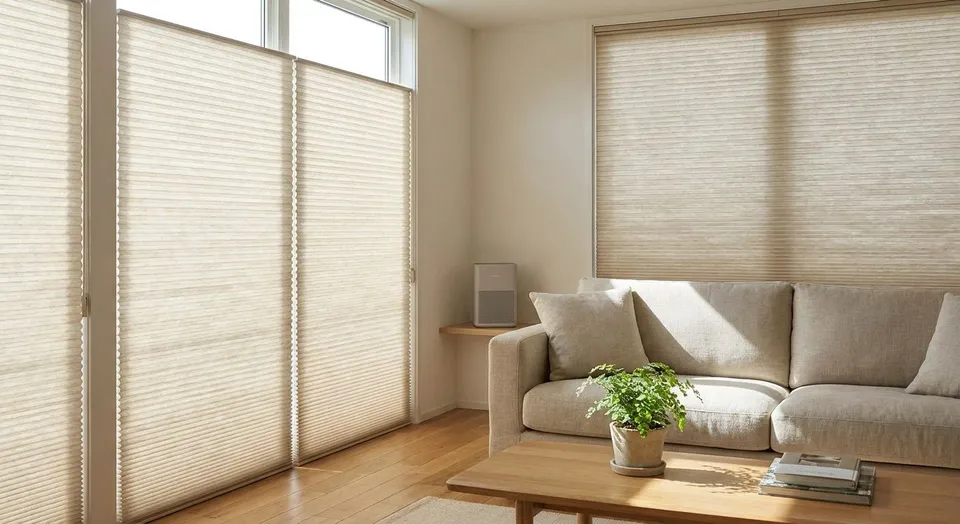
Dust, pollen, and mold spores collect in window treatments more than most homeowners realize, and if you or a family member deals with allergies or asthma, the wrong shade can turn a bedroom or living room into a trigger zone. Cellular shades, with their honeycomb-shaped pockets, trap air instead of dust when built and finished correctly. But not every cellular shade on the market is built for allergy control.
- Cellular shades for allergies work best with sealed honeycomb cells and a wipeable, antimicrobial-treated fabric. Not raw fiber weaves.
- Light-filtering cellular shades hold up to weekly vacuum cleaning without fraying. Buy.
- Avoid fabric roman shades and heavy drapery for asthma-prone bedrooms; they hold dust longer than cellular cells.
- Cordless, top-down-bottom-up cellular shades cut down on hand contact and let you vent a room without opening blinds fully.
- Blackout cellular shades add allergy control plus better sleep for shift workers or kids with respiratory sensitivities.
Why this matters
Allergens don't just float through the air. They settle on horizontal blind slats, hide in drapery folds, and build up in loosely woven fabrics that never get a real cleaning. A 2026 remodel or new-construction window covering choice affects indoor air quality for years, and swapping shades every allergy season isn't realistic for most households in the Greater Seattle Area.
Cellular shades solve part of this by design: the honeycomb structure means less exposed fabric surface than a flat roller shade or a pleated roman shade, and most models wipe clean with a damp cloth instead of shaking loose dust back into the room. That said, the material, the mount, and how the shade is operated all matter for someone managing asthma or seasonal allergies.
Who cellular shades for allergies are for
This guide is for homeowners in Auburn, Bellevue, Tacoma, or anywhere in South King County who have a household member with diagnosed allergies, asthma, or chronic sinus issues, and who are choosing window treatments for bedrooms, nurseries, or home offices where they spend the most hours. If pollen counts spike every spring and your current blinds or curtains need constant dusting, this is the buyer profile the rest of this guide targets.
What to look for in cellular shades for allergies
Cell construction and fabric density
A tightly woven, single-cell or double-cell honeycomb traps less airborne dust than an open-weave fabric shade. Double-cell designs add an extra air pocket, which also improves the insulation value, useful during Pacific Northwest winters when windows get sealed shut for months at a time.
Wipeable, non-porous fabric coating
Fabric that's been treated or coated resists dust adhesion and wipes clean with a microfiber cloth or vacuum brush attachment. Raw, untreated fabric fibers hold onto pollen and pet dander at a much higher rate, which matters if your household includes both allergy sufferers and pets.
Cordless or motorized operation
Cords collect dust and require hand contact every time you raise or lower the shade, which then transfers allergens to your hands and face. Cordless designs, or motorized cellular shades with a remote, cut that contact point out entirely, a real consideration for kids' rooms or anyone with sensitive skin alongside respiratory issues.
Light-filtering vs. blackout fabric
Light-filtering cellular fabric lets diffused daylight through while still controlling glare, which is the right call for living rooms and home offices. Blackout cellular shades work better in bedrooms, especially for shift workers or anyone whose asthma symptoms worsen with disrupted sleep from early morning light.
Top-down-bottom-up functionality
This mount style lets you drop the top of the shade for privacy and ventilation without lowering the whole panel, which means you can crack a window and air out a room during low-pollen hours without exposing the entire shade to outside air constantly. It's a small feature that matters more than it sounds for anyone managing seasonal allergies.
Ease of professional cleaning and reinstallation
Shades that come off the mount easily for a deeper wash extend the life of the allergy control benefit. A shade that has to be replaced instead of cleaned defeats the purpose within a year or two.
Top picks for allergy and asthma-friendly homes
The everyday workhorse, cellular shades in Auburn, WA. Double-cell honeycomb construction with a wipeable fabric finish, built for South King County's mix of pollen season and long closed-window winters. This is the pick for a household that needs one shade style across multiple rooms without juggling different cleaning routines. Verdict: Buy.
The energy-and-air-quality combo, energy-saving cellular shades for Rainier area homes. Insulating cell design reduces the number of times HVAC filters cycle dusty air through the house per day, which indirectly helps allergy symptoms tied to forced-air heating. Best suited for homes where energy bills and allergy control are both on the table. Verdict: Buy.
The nursery and kids'-room specialist, window treatments for nurseries and kids' rooms. Cordless cellular options remove cord-related dust contact and choking hazards in the same decision, which matters when a child has both allergy sensitivity and curious hands. Verdict: Consider if you need a nursery-specific fabric weight; otherwise standard cordless cellular covers it.
The garage-conversion and bonus-room fix, insulated cellular shades for garage conversions. Garage conversions in Auburn and Kent often trap more dust and construction residue than finished rooms, so a sealed-cell shade with a wipeable surface keeps the new living space from becoming an allergy trap on day one. Verdict: Buy for any converted space used as a bedroom or home gym.
The bedroom sleep-and-allergy pick, blackout shades for bedrooms. Blackout cellular fabric blocks morning light while keeping the honeycomb's dust-resistant profile, which pairs sleep quality with allergen control in one product. Verdict: Buy for bedrooms where both light sensitivity and asthma symptoms are a factor.
Get an allergy-friendly shade consult
Rainier Blinds measures and installs cellular shades across the Greater Seattle Area.
What to avoid
- Loose-weave roman or bamboo-style shades in bedrooms. They look right for a nursery or farmhouse aesthetic, but the exposed fabric texture holds dust and pollen far longer than a sealed cellular cell.
- Heavy drapery panels as a primary window covering for asthma sufferers. Fabric drapery collects dust at a rate cellular shades simply don't, and washing full panels is a bigger job than wiping a cellular shade down monthly.
- Corded lift systems in any room used by someone with severe allergies or young kids. Beyond the dust-and-contact issue, cords add a second maintenance headache that cordless or motorized cellular shades remove entirely.
Verdict comparison table
| Pick | Best for | Key feature | 2026 Verdict |
|---|---|---|---|
| Cellular shades, Auburn WA | Whole-house consistency | Double-cell, wipeable fabric | Buy |
| Energy-saving cellular shades | Air quality + utility bills | Insulating honeycomb cell | Buy |
| Nursery/kids' room shades | Cordless safety + allergy control | No-cord lift system | Consider |
| Insulated garage conversion shades | New living spaces | Sealed cell, dust resistance | Buy |
| Blackout bedroom shades | Sleep + asthma symptom control | Blackout cellular fabric | Buy |
FAQ
Are cellular shades good for allergies?
Yes, cellular shades for allergies work well because the honeycomb cell structure limits exposed fabric surface and most modern fabrics wipe clean instead of trapping dust like open-weave curtains. Double-cell versions add extra insulation, which cuts down on dusty forced-air cycling in winter.
Are cellular shades better than blinds for asthma?
Cellular shades generally outperform slat blinds for asthma control because slats collect dust on every horizontal surface and require frequent hand-wiping to stay clean. A sealed cellular cell holds less airborne debris and needs less frequent cleaning.
How often should you clean cellular shades for allergy control?
Wipe cellular shades with a microfiber cloth or vacuum brush attachment every two to four weeks during high-pollen months. A deeper cleaning once or twice a year, especially before spring allergy season, keeps the fabric from building up trapped dust.
Do blackout cellular shades help with allergies too?
Blackout cellular shades keep the same dust-resistant honeycomb structure as light-filtering versions while adding better light control for sleep. For bedrooms, that combination addresses both allergy symptoms and sleep disruption at once.
Are cordless cellular shades worth it for allergy-prone households?
Cordless cellular shades remove a contact point that transfers dust and allergens from the cord to your hands and face every time you adjust the shade. For kids' rooms and bedrooms used by allergy sufferers, cordless is the safer standard in 2026.
What's the difference between single-cell and double-cell for allergy control?
Double-cell cellular shades add a second air pocket, which improves insulation and slightly reduces the surface area exposed to household dust compared to single-cell versions. The allergy benefit is smaller than the energy benefit, but it still matters for households running forced-air heat most of the year.
Can cellular shades replace air purifiers for allergy control?
No, cellular shades reduce dust and pollen buildup on window coverings but don't filter airborne particles the way a dedicated air purifier does. They work as one part of an allergy-reduction plan, not a standalone fix.
Do outdoor pollen levels affect indoor cellular shade maintenance?
Yes, homes near open fields or heavy tree cover in South King County see higher pollen transfer onto window shades during spring months. Wiping cellular shades down more frequently during peak pollen weeks keeps allergy symptoms from building up indoors.
One last thing
The detail most homeowners miss: a cellular shade's allergy benefit disappears fast if it's mounted with a corded pull system that never gets wiped down along with the fabric. Clean the cord track and the headrail the same day you wipe the fabric, dust collects in both places, and skipping one undoes the point of upgrading in the first place.